



New Faculty Q&A: Peter Burr
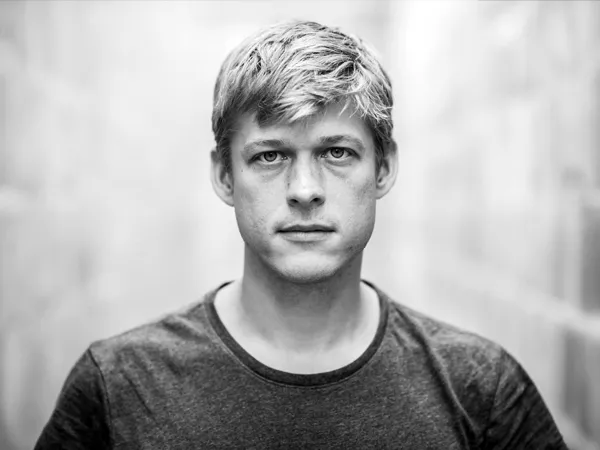
Peter Burr, an assistant professor in the Department of Art and Art History, is an artist who transforms complex computational systems into emotional, sensory experiences through large-scale immersive environments. Drawing from early experiments with computational graphics during the mid-1990s, Burr's practice has evolved to incorporate techniques that merge fundamental computing operations with modern real-time rendering systems. His work frequently explores the relationship between human-machine interfaces and the underlying systems that drive them. His work has been presented at major cultural institutions including the Museum of Modern Art, The Barbican Centre, Documenta 14, the Whitney Museum of American Art and the Centre Pompidou. He holds a Ph.D. in game design from Rensselaer Polytechnic Institute and a B.F.A. from Carnegie Mellon University.
Tell us about the classes you’ll be teaching this year.
This fall I am teaching a course called World Building. It’s a studio class revolving around the development of imaginary worlds as a creative practice. We will be playing around with lots of new digital technologies as well as reading and watching lots of science fiction and fantasy!
In the spring I'm teaching a class called Artist Engines: How to Blow Up a Digital Pipeline. It is a studio course exploring game engines, AI tools, and other emerging media systems. We will survey the current landscape of digital tools, think about who they are built for, what they are built to produce, and how long they are designed to hold up. From there, we will take apart standard digital production pipelines and build our own, producing a semester of artwork that couldn't have been made by our hands alone.
What attracted you to the Department of Art and Art History and The University of Texas at Austin?
I'm really excited about the people here. I've known so many artists over the years who came through this department, and I can't wait to be part of it.
How did your professional pathway lead to your current research focus?
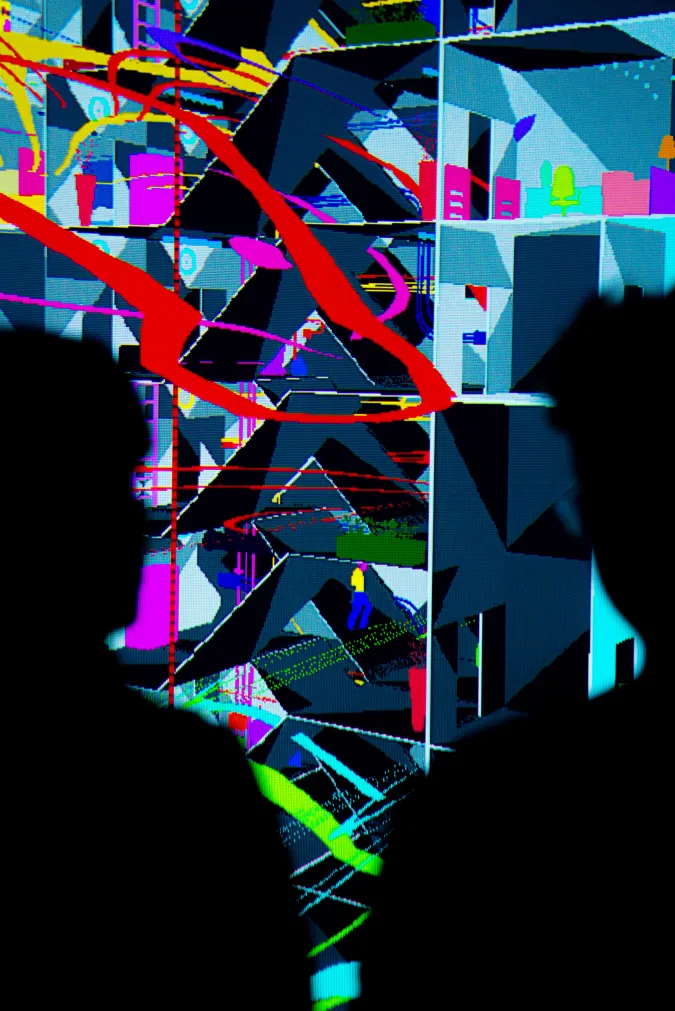
I went to art school in the nineties - a time when computer art meant something really different than it does today. I chose to go to art school because I was interested in painting and drawing, and Carnegie Mellon completely blew that up. There, I became interested in animation, installation, the internet as a platform for making work. Fast forward 25 years, and I've just completed a Ph.D. in game design, building large-scale installations as self-running systems, worlds that keep generating themselves whether or not anyone is watching.
What’s something that students and colleagues should know about you?
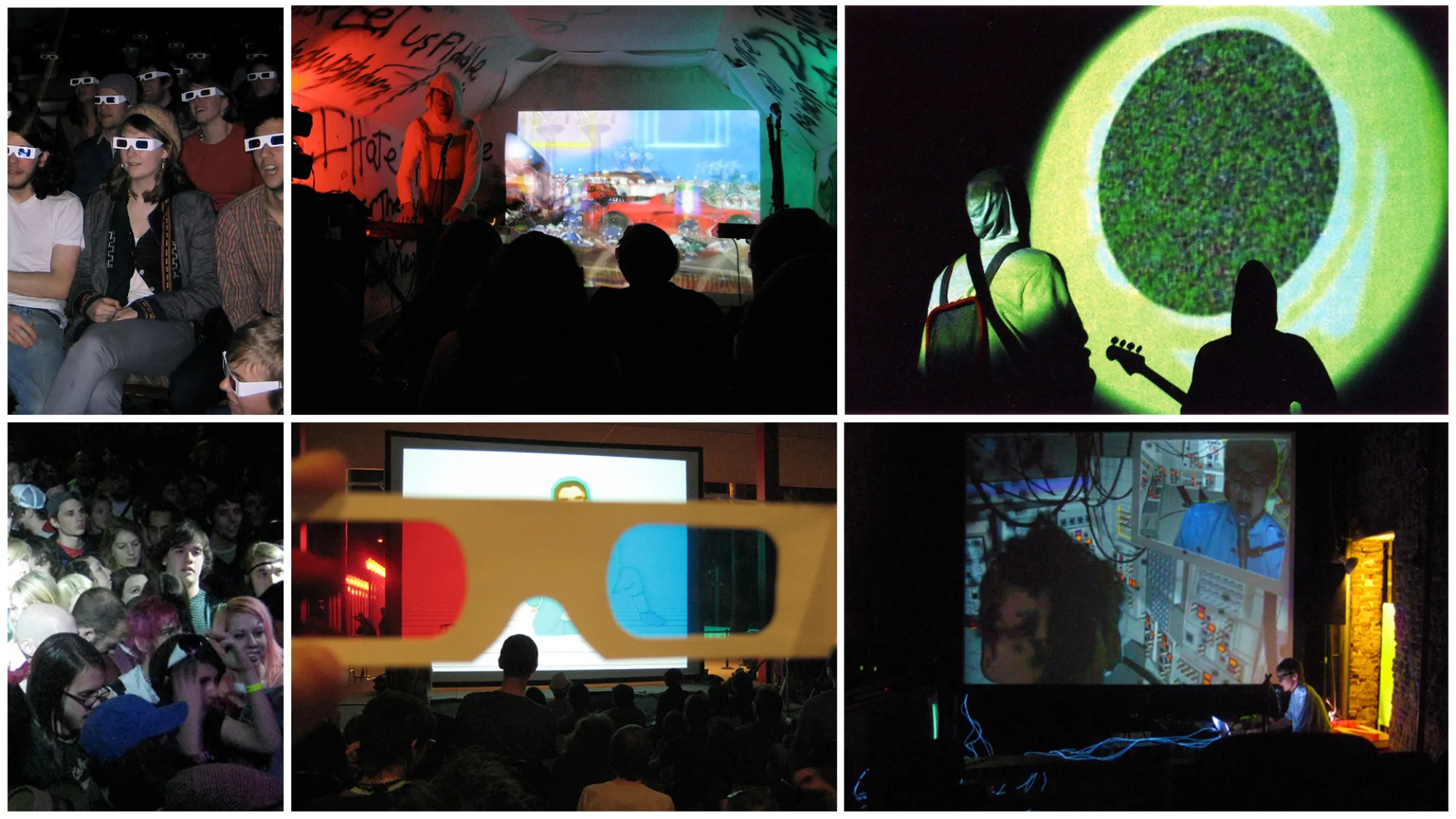
For twenty years I've gone on tour with a project called Cartune Xprez, showing experimental animation in bars, on boats, in cinemas, and hundreds of other zones around the world. Before YouTube existed, I had no idea where digital animation lived, so I built this space for it. CX traveled light and cheap. It could show up anywhere and scale to any venue. Our first tour was a bunch of inflatables, a keyboard, bass, guitar, and a box of DVDs we sold for $10 to fund it. At its core was a curated animation program and a bedsheet we could use as a projection screen if needed. As YouTube and other platforms came to dominate the world of moving images, I shifted CX toward commissioning, and curating and producing stopped being separate jobs.
It's probably shaped my practice more than anything else I've done, because it forced me to confront what actually happens when artwork lands in front of people. It almost never goes how I think it will.
What do you enjoy doing when you’re not teaching or working in the studio?
Having just moved to Austin from New York, I've been really enjoying biking around this city. I hear there's a bunch of rock climbing within biking distance and I'm excited to go explore the limestone splendors as soon as I settle in.

Learn more about other faculty members joining the College of Fine Arts this fall