



New Faculty Q&A: Caroline Anderson
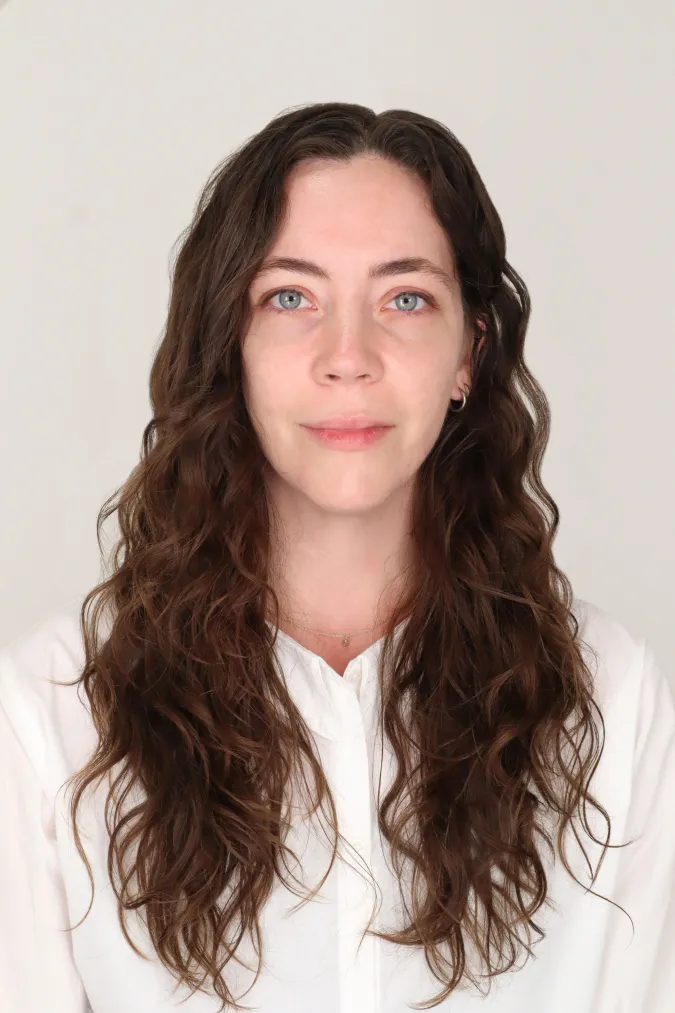
Caroline Anderson, an assistant professor in the Department of Art and Art History, is an interdisciplinary artist, writer and curator working across sculpture, installation, digital media and fiction. Her research examines technology as a shifting historical category through which systems of knowledge, perception and social organization are both structured and destabilized. She is drawn to moments when established distinctions become unstable and new forms of meaning emerge, approaching the present as a condition in which artifact and organism, inherited histories and speculative futures begin to overlap. Anderson has presented solo exhibitions at Oregon Contemporary, the Ohio State University Farmer Family Gallery, OTOT Studios and the Neon Heater Gallery, among others. She holds an M.F.A. in Art and Technology from the University of Oregon and a B.F.A. in Fine Arts with a certificate in Critical Visions from the University of Cincinnati.
Tell us about the classes you’ll be teaching this year.
I’m developing two new courses this year: Strange Forms looks at how AI and other digital processes can be used to generate unfamiliar objects and forms, and how those ideas can move into physical materials through processes like 3D printing, CNC milling, laser cutting and robotic fabrication, whereas Emergent Worlds takes a broader approach, using AI, science fiction, cybernetics and contemporary art as starting points for imagining alternative realities, speculative fictions and narratives that can feed into students’ own practices. I’m hoping both classes will be open to students across the College of Fine Arts, bringing together different disciplines and ways of working.
What attracted you to the Department of Art and Art History and The University of Texas at Austin?
I was especially drawn to the opportunity to help shape how AI and creative practice might be approached within a studio art program, since that relationship is still being actively defined. I was also excited by the chance to work alongside faculty whose practices I admire and to join a major research university with connections across many different fields. Austin itself was part of the appeal as well, and I was interested in experiencing a new city and part of the country.
How did your professional pathway lead to your current research focus?
My path has been fairly nonlinear. I was completing my B.F.A. during the height of what we might now call the “Post-Internet” moment and became interested in the amount of art, writing and theory emerging in response to the changing relationship between digital culture and everyday life. Moving through different institutions, places and intellectual contexts since then has gradually shifted my attention toward larger questions about technology, intelligence, computation and how seemingly new developments fit into much longer histories.
AI is one part of that work now, but I see it within a wider set of questions around intelligence, life, agency and the categories we use to make sense of those things. Much of my recent work sits at the point where those categories become unstable or stop being especially useful, and where existing language may not fully describe what is happening.
What’s something that students and colleagues should know about you?
I’m primarily driven by ideas and questions rather than by a particular medium or tool, and I let the needs of a project determine how it gets made. That carries into my teaching as well, where students have room to follow questions in different directions, experiment with different approaches, and develop their own ways of working.
What do you enjoy doing when you’re not teaching or working in the studio?
My biggest hobby is bouldering, and I go to the climbing gym a few times a week. I also love to bake, especially when there’s an occasion that gives me an excuse to make something elaborate or try something new.
Learn more about other faculty members joining the College of Fine Arts this fall