



New Faculty Member Q&A: Chris Ozley
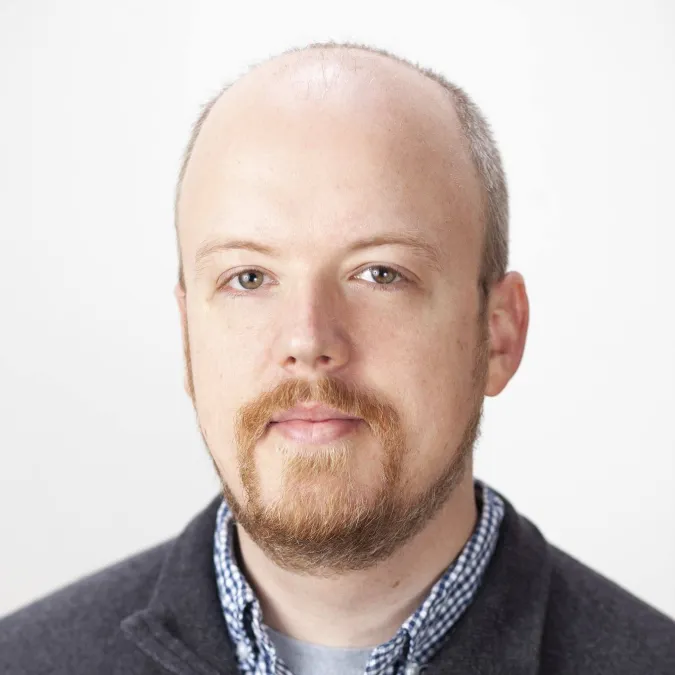
Chris Ozley, assistant professor of practice in the Department of Arts and Entertainment Technologies, is a composer and arranger whose work spans a wide range of media, from chamber ensembles to interactive electronic systems, with a focus on nonlinear narrative, perception and sonic exploration. He teaches courses in audio processing, generative audio programming and interactive music, emphasizing collaborative, project-based learning grounded in professional creative practice. He received M.M. and D.M.A. degrees in Music Composition from The University of Texas at Austin. Ozley previously taught in the department as an adjunct faculty member.
Tell us about the classes you’ll be teaching this year.
This year I’ll be teaching a mix of courses centered on audio, music and interactive media—things like Generative Audio Programming, Audio Processing, Interactive Music, and some of our collaborative project-based classes. Across all of them, the goal is pretty consistent: help students build strong technical skills while also giving them room to be creative and take risks. A lot of what we do is project-based, and most courses end with some kind of public-facing outcome—performances, showcases, installations—so students are working toward something real. I also try to build in as much collaboration as possible, especially with Theatre and Dance, so students get experience working in the kind of team environments they’ll see after they graduate.
What attracted you to the Department of Arts and Entertainment Technologies and The University of Texas at Austin?
AET is kind of a perfect fit for the way I think about teaching and creative work. It’s inherently interdisciplinary—you’ve got students interested in design, coding, performance, storytelling—and the program actually encourages those intersections instead of separating them out. UT Austin also gives you the infrastructure to do ambitious creative work. The idea that a class can turn into a full performance, a large-scale collaborative project, or something that’s publicly presented was a huge draw for me. That matches how I approach teaching: learning feels more meaningful when students are working on something that actually exists outside the classroom.
How did your professional pathway lead to your current research focus?
My background started in music education and composition, and over time I got more and more interested in how technology shapes the way we create and experience sound. That led me into electroacoustic music, generative systems, and interactive work during grad school. At the same time, I’ve always stayed connected to professional creative practice—writing, arranging, designing, collaborating—which really shaped how I think about research. For me, it’s less about separating “research” and “practice” and more about exploring how tools, systems, and creative ideas come together—especially in collaborative environments where sound plays a big role in storytelling and design.
What’s something that students and colleagues should know about you?
I care a lot about creating a balance between structure and creative freedom. I’ll push students pretty hard to grow, but I also try to make sure they have the support and clarity they need to succeed. I’m big on communication, feedback, and iteration—nothing in my classes is “one-and-done.” Also, I genuinely enjoy collaboration. A lot of the best work I’ve been part of came from people with completely different skill sets working toward the same goal, so I try to build that into as many classes as possible.
What do you enjoy doing when you’re not teaching/researching/working?
When I’m not in the classroom or at my computer, I’m usually outside, running or hiking somewhere around Austin (or trying to find somewhere new to explore). I’m also still actively performing when I can. I’ve had the opportunity to travel internationally as a drummer—including trips to Pakistan—which has been an incredible way to stay connected to music outside of the academic world. Beyond that: big Atlanta sports fan (we all have our struggles), and a proud UT Longhorn—did both my master’s and doctorate here, so this place feels like home.
Learn more about other faculty members joining the College of Fine Arts this fall