



Student-led opera production "Downwind" tells the story of nuclear testing survivors
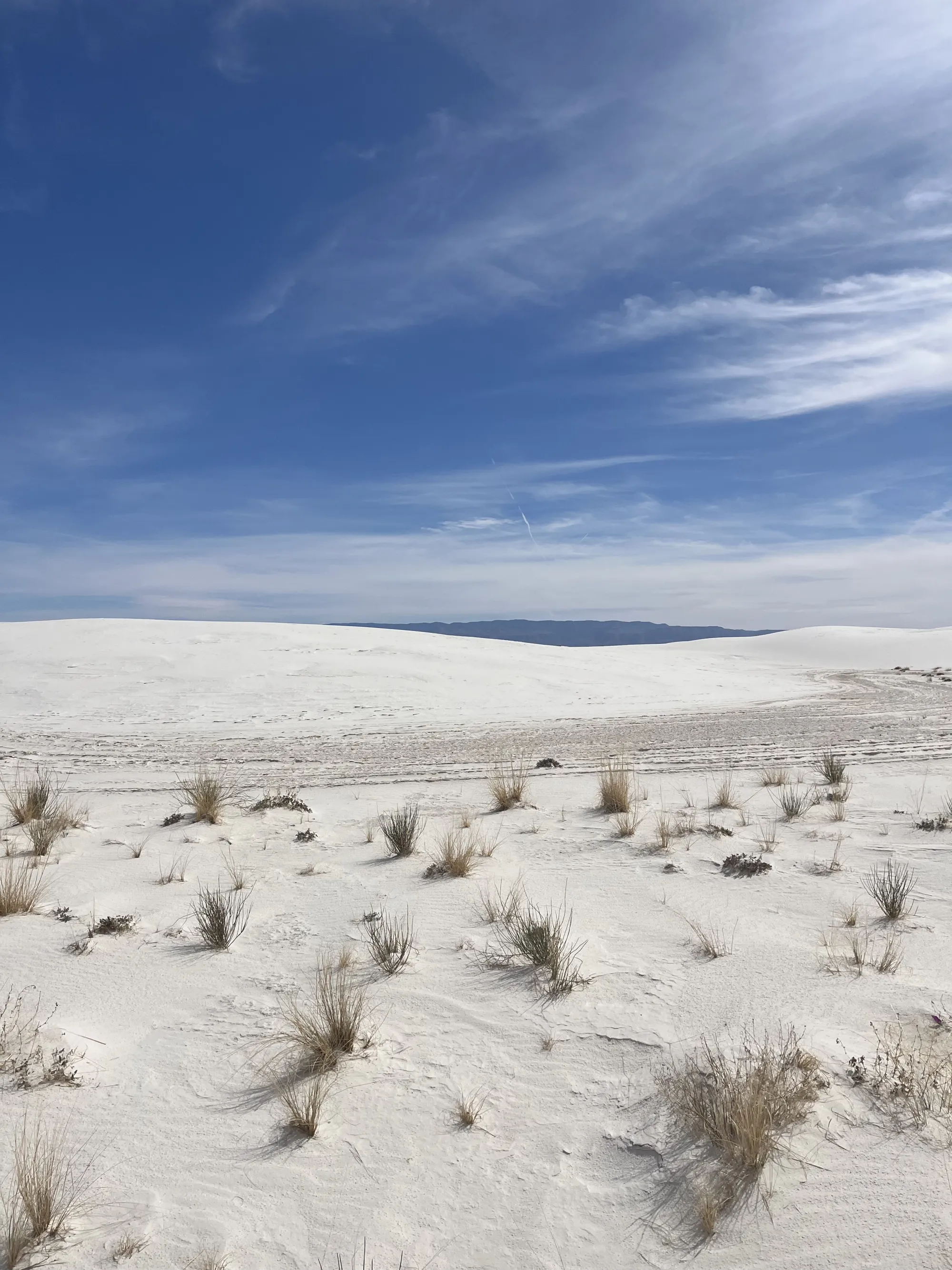
When Michael Smith and Demian Chavez Galvan traveled to the glittering, wind-swept dunes near White Sands, New Mexico to conduct research for an opera about the survivors of the 1945 Trinity nuclear testing, they didn’t know how far that ever-present wind would push their story.
This week, their original opera, Downwind, premieres in the McCullough Theatre, the culmination of a year and half of writing, composing, collaborating, producing and rehearsing. And some of the same survivors that shared stories that contributed to the fictional opera will be in the audience to see it all become reality.
“This isn’t an opera about the creation of the bomb,” said Smith, a doctoral student in the Butler School of Music and the composer of Downwind. “It’s about the people who were affected by it and the way they cared for each other afterward.”
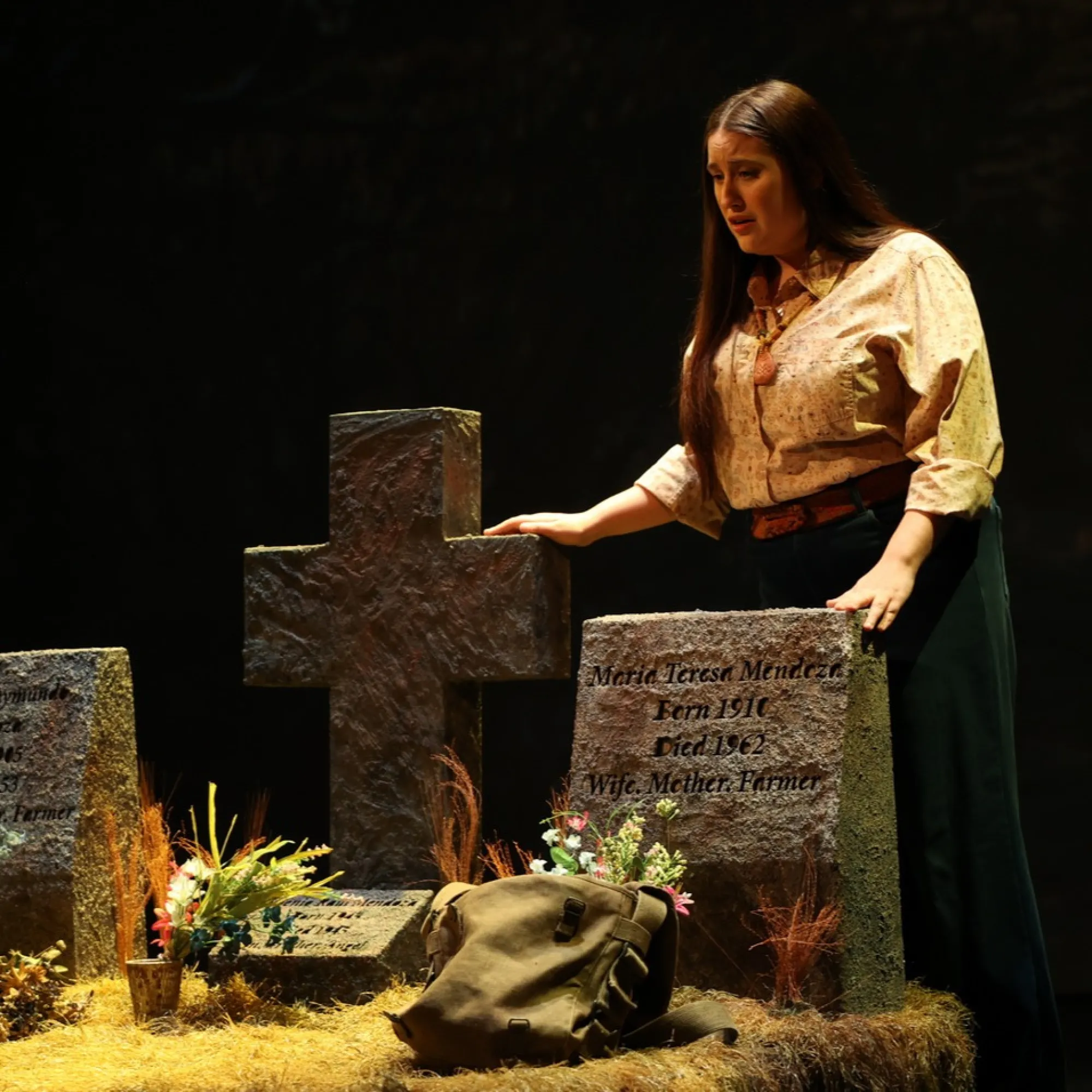
Downwind centers on the Mendoza family, following them backwards through time from 1990 to the morning of July 16, 1945, when Trinity, the world’s first nuclear weapons test, was detonated.
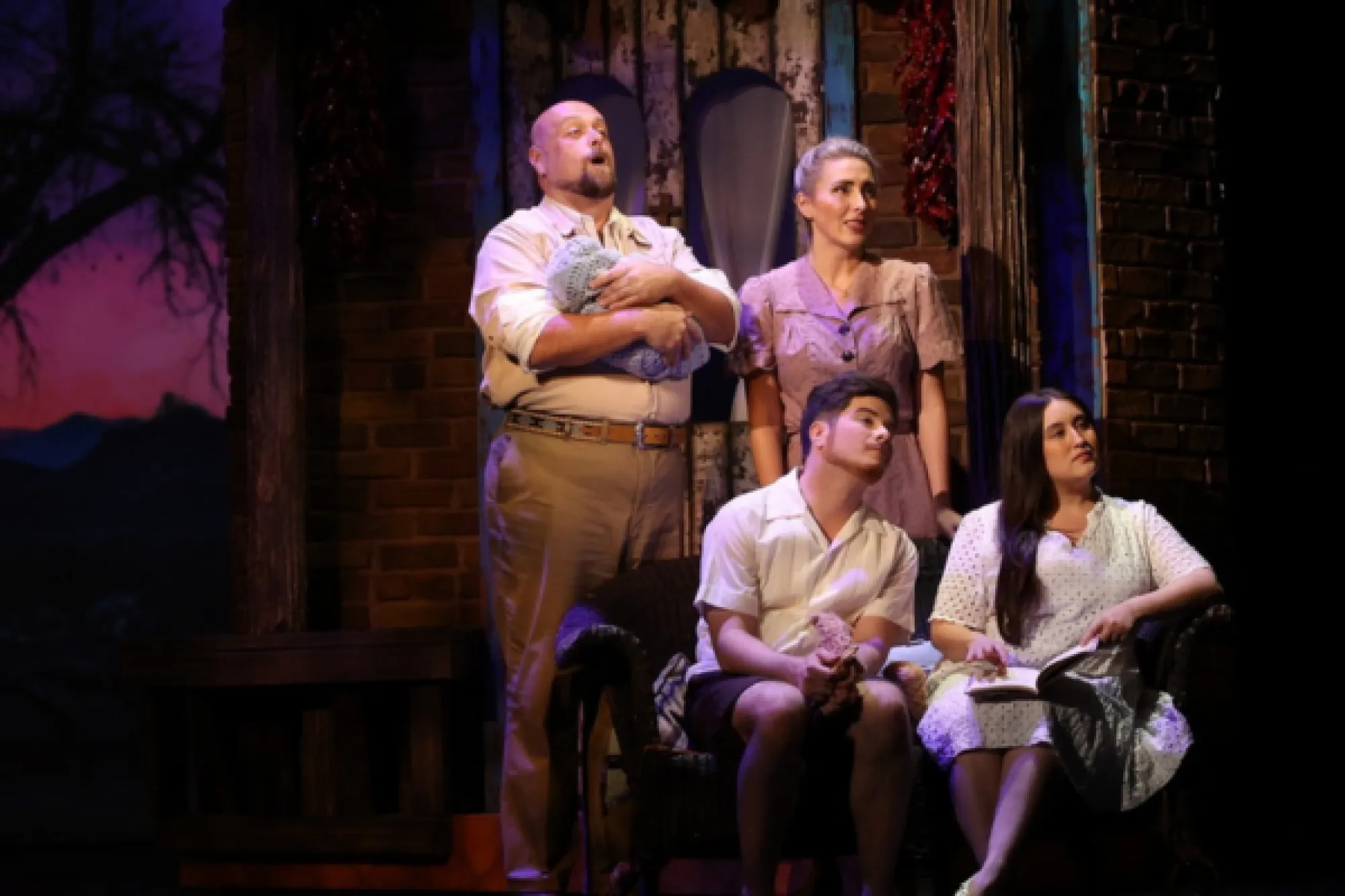
The Trinity test exposed thousands of unsuspecting residents across southern New Mexico to radioactive fallout. Known as “downwinders,” these communities reported generations of elevated cancer rates, birth defects and chronic illness. These harms were never formally tracked at the time and only recently acknowledged in federal compensation policy, with some compensation funding passing Congress in 2025.
“There’s a lot of pain in this story,” said Chavez Glavan (B.A., Theatre and Dance, 2025), who wrote the opera’s libretto. “But it isn’t about the pain. It’s about the care, the dignity people show one another in life and even in death. It’s not a story full of grand dramatic gestures. These were people who didn’t get to choose what happened to them. So, the opera focuses on the quiet ways they cared for each other.”
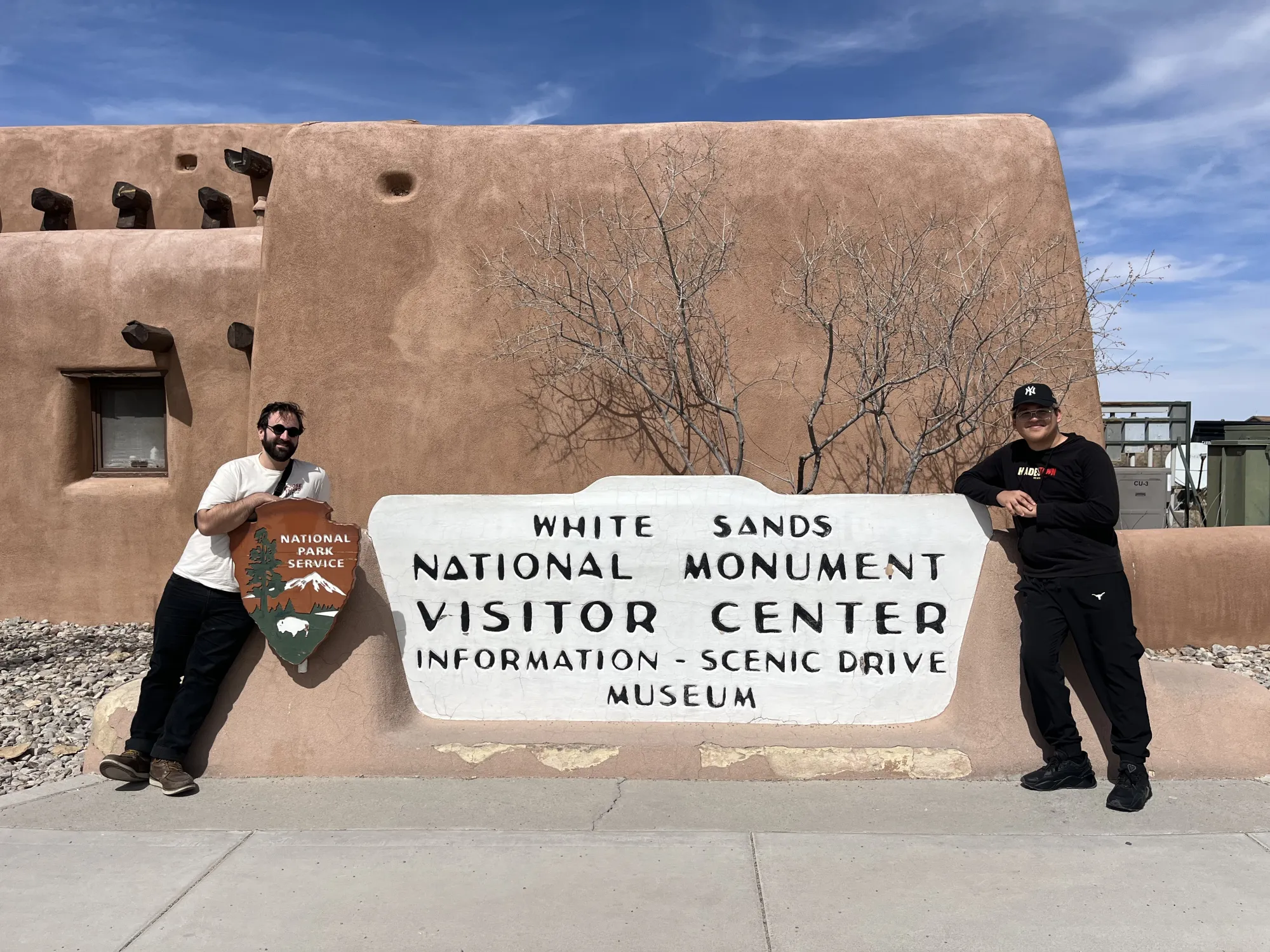
The commitment to telling the survivors’ stories extended beyond the writing and music. In March 2025, Smith and Chavez Galvan traveled to southern New Mexico to meet with members of the Tularosa Basin Downwinders Consortium, including longtime advocate Tina Cordova. They listened to testimony of illness, loss and decades-long fights for recognition, conversations that shaped both the structure of the libretto and the emotional language of the score.
Working from real experiences meant approaching the material with care and humility, Smith and Chavez Galvan said, and the writers worked hard to center the humanity of the survivors and not sensationalize their suffering.
When Chavez Galvan and Smith began collaborating in the fall of 2024, Downwind was slated to follow the model of earlier Butler Opera Center commissions: a student-created work presented in a stripped-down workshop format— intimate, minimalist and short-lived with a few singers and a piano.
But as the libretto took shape and Smith began composing, faculty leaders at the Butler Opera Center saw the potential for something larger. The project was moved into a full mainstage production with an extended run time, an extraordinary investment in a student-led work.
“Opera departments do not put their entire budget into a student-led opera,” Smith said. “It just doesn’t happen.”
Instead of managing their own props and staging as in previous iterations, the team suddenly had access to professional design support, fabrication studios, stage management, integrated media and a full chorus and orchestra.
“What’s really special about UT is the trust,” said Madison Jackson, the director of the production and a D.M.A. student in opera directing. “They give you the opportunity and then they let you fly.”
The opportunity to premiere an original student-created opera that centers such an important topic is an incredible gift, she said.
“The perception of opera is that is can be an antiquated medium,” Jackson said. “We have to keep creating new work. If we only repeat the classics, the art form doesn’t grow.”
And opera is the perfect medium to carry such a weighty story.
“Opera gives you space to sit with something,” Chavez Galvan said. “To let it breathe. To honor the weight of it.”
For Smith, composing the music for Downwind meant translating both testimony and terrain into sound. Raised in the Northeast, he had never experienced the particular vastness of southern New Mexico before the research trip.
“There’s something very specific about that state,” Smith said. “It feels both massive and empty at the same time. That was essential to how the opera ended up sounding.”
The score of the 75-minute show is often delicate, he said, with moments of intensity when necessary, but grounded in warmth — a musical reflection of the care at the center of the story. In the opera’s final moments, as the Trinity test detonates in silence offstage, the audience is left with the sound of wind, recorded by Smith during the team’s visit to New Mexico.
The score also incorporates choral interludes inspired by Chiricahua Apache creation texts, accompanied by digital projections, expanding the story beyond a single family to reflect the land and communities that have long called the region home.
“When you tell a story like this, you have to be genuine,” Smith said. “You can’t make people care with statistics. You make them care by telling a story about a family.”
When the curtain falls and the lights come up at the McCullough Theatre, some of the very people whose testimony shaped Downwind are expected to be sitting in the audience.
For Smith, Chavez Galvan and Jackson, that is the true measure of the work, not spectacle, but long overdue recognition of their experiences.
Showtimes:
Thursday, Feb. 19, 7:30 p.m.
Saturday, Feb. 21, 7:30 p.m.
Sunday, Feb. 22, 4 p.m.
Tickets: $10-$20
Creative Team of Downwind:
Cast:
Eduardo Mendoza - Ben Lowe
Teresa Mendoza - Kara Covey
Enrique Mendoza - Connor Behrmann
Ofelia Mendoza - Kayla Suter
Creative team:
Music by Michael Robert Smith
Libretto by Demian Chavez Galvan
Conductor - Douglas Kinney Frost
Stage Director - Madison Jackson
Producer and Principle Coach - Tamar Sanikidze
Scenic Design - Austin Shirley
Costume Design - Aaron Kubacak
Lighting Design - Kallie Pierce
Integrated Media Design - Arash Baquipur
Stage Manager - Beatrice Huang
Assistant Stage Manager - Karol Yanez
Musical Preparation - James Maverick, Vakhtang Zaalishvili, Yueqi Zhang
Composition Faculty Advisor - Yevgeniy Sharlat