



From Silence to Sound
The Restoration of the Bates Pipe Organ and the Organ Program
By Esther Robards-Forbes
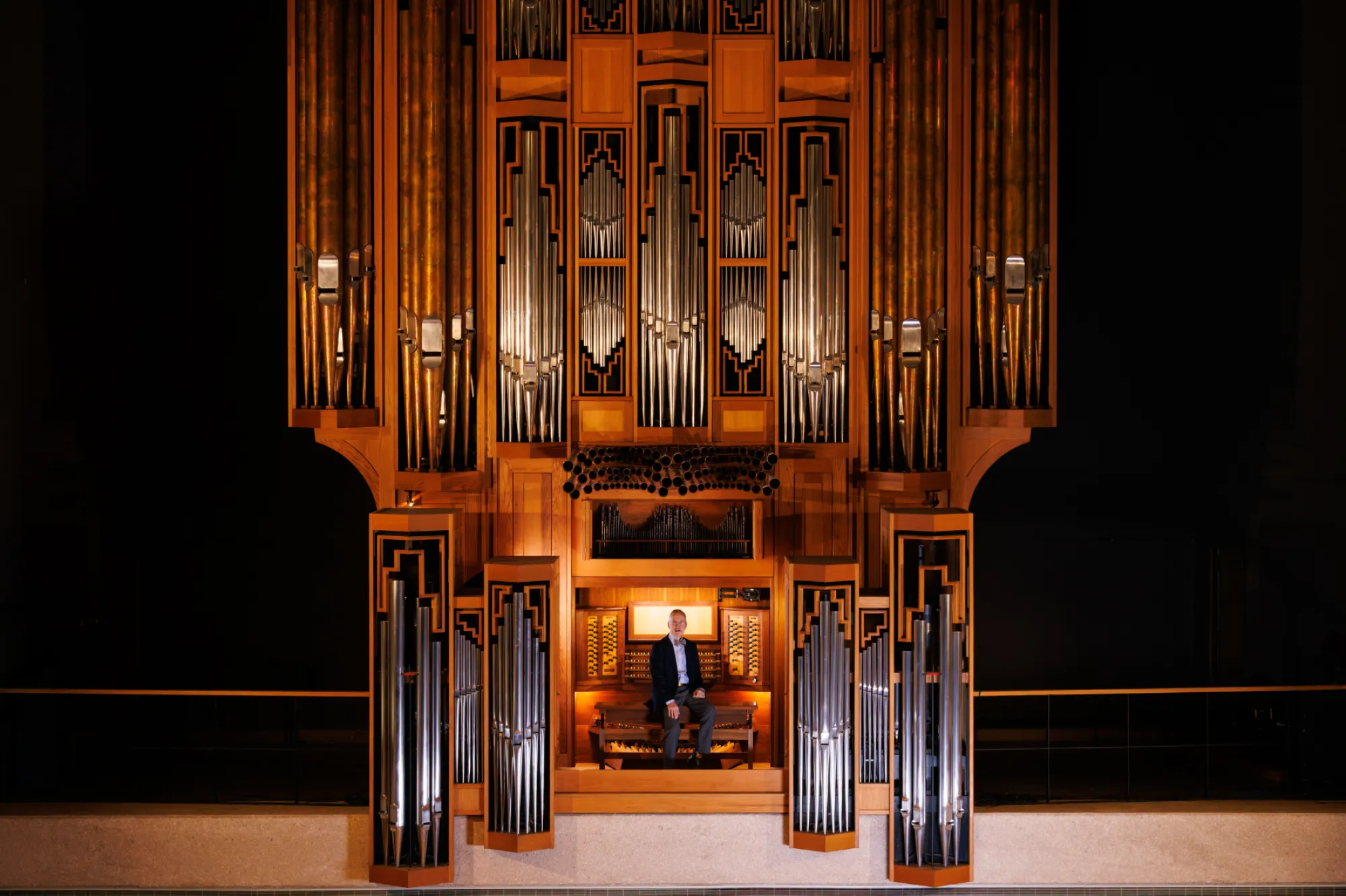
Deep in the heart of the Butler School of Music, a giant has been stirring back to life.
The pipe organ in Bates Recital Hall rises nearly two stories above the stage, a towering presence of wood, metal and air. When it was built in 1982, the Visser-Rowland tracker organ was the largest of its kind in the United States. But after more than four decades of near-constant use, it had begun to show the wear of an instrument twice its age.
For years, following the death of longtime Professor of Organ Gerre Hancock in 2012 and the departure of Matthias Maierhofer in 2016, the instrument fell largely silent. Without a dedicated instructor, the program dwindled, and the organ, once a regular voice in the hall, became an occasional presence rather than its centerpiece.
That began to change in 2019, when renowned organist Gregory Eaton joined the Butler faculty with a vision: to rebuild not only the organ program, but the instrument itself.
“There’s nothing like the sound of an organ,” Eaton said. “It can go from a whisper to something that completely surrounds you. It can stand completely alone or support other instruments in a way that no other can.”
Now, a coordinated effort to restore the organ’s mechanical systems and rebuild the organ instruction program is bringing the instrument back into daily use. Led by faculty, supported by donors and fueled by renewed student interest, the work reflects a broader goal: to preserve one of the most complex and powerful instruments in music while training the next generation of musicians to play it.
As demand for skilled organists grows locally and nationally, Butler’s revitalized program is positioning itself as both a steward of tradition and a pipeline for the future.
“It’s not just an instrument,” said Susan Thomas, director of the Butler School of Music. “It’s about what it makes possible.”
A pipe organ is not simply a piano with delusions of grandeur. It is an intricate network of thousands of pipes, air systems, mechanical components and control mechanisms that must work in precise coordination.
“A pipe organ like this is one of the most complex musical instruments in the world,” Eaton said.
Unlike the piano, where a note fades after it is struck, the organ requires the musician to control both the beginning and the end of every sound. Notes can be sustained indefinitely, shaped and layered across multiple keyboards, stops and foot pedals.
That complexity is part of what makes the instrument so powerful, and simultaneously so vulnerable to wear.
Over time, components inside the Bates organ began to deteriorate. The leather used in its mechanical systems dried and broke down, affecting how air moved through the instrument.
“You could hear the leather in the mechanisms cracking and creaking when it was played,” Eaton said.
Those sounds were more than cosmetic. They were signs that key systems were failing, threatening the instrument’s ability to function reliably.
The work undertaken during the past year in Bates Recital Hall, with future phases still on the horizon, is not a full restoration. A comprehensive overhaul would require removing thousands of pipes and dismantling much of the instrument. Instead, technicians are focusing on critical mechanical systems, replacing worn components, restoring functionality and extending the organ’s life.
For Thomas, the effort is about more than repair. “Instruments like this one require a lot of ongoing care,” Thomas said. “This commitment from the Butler School and its supporters to restore it will serve future generations of students and audiences.”
That preservation effort has been made possible in part through donor support, including contributions from alumni and members of the Austin music community who see the organ as a shared cultural resource.
Mike Korte, an Austin resident and longtime supporter of music programs at UT, chose to focus his giving on the instrument itself.
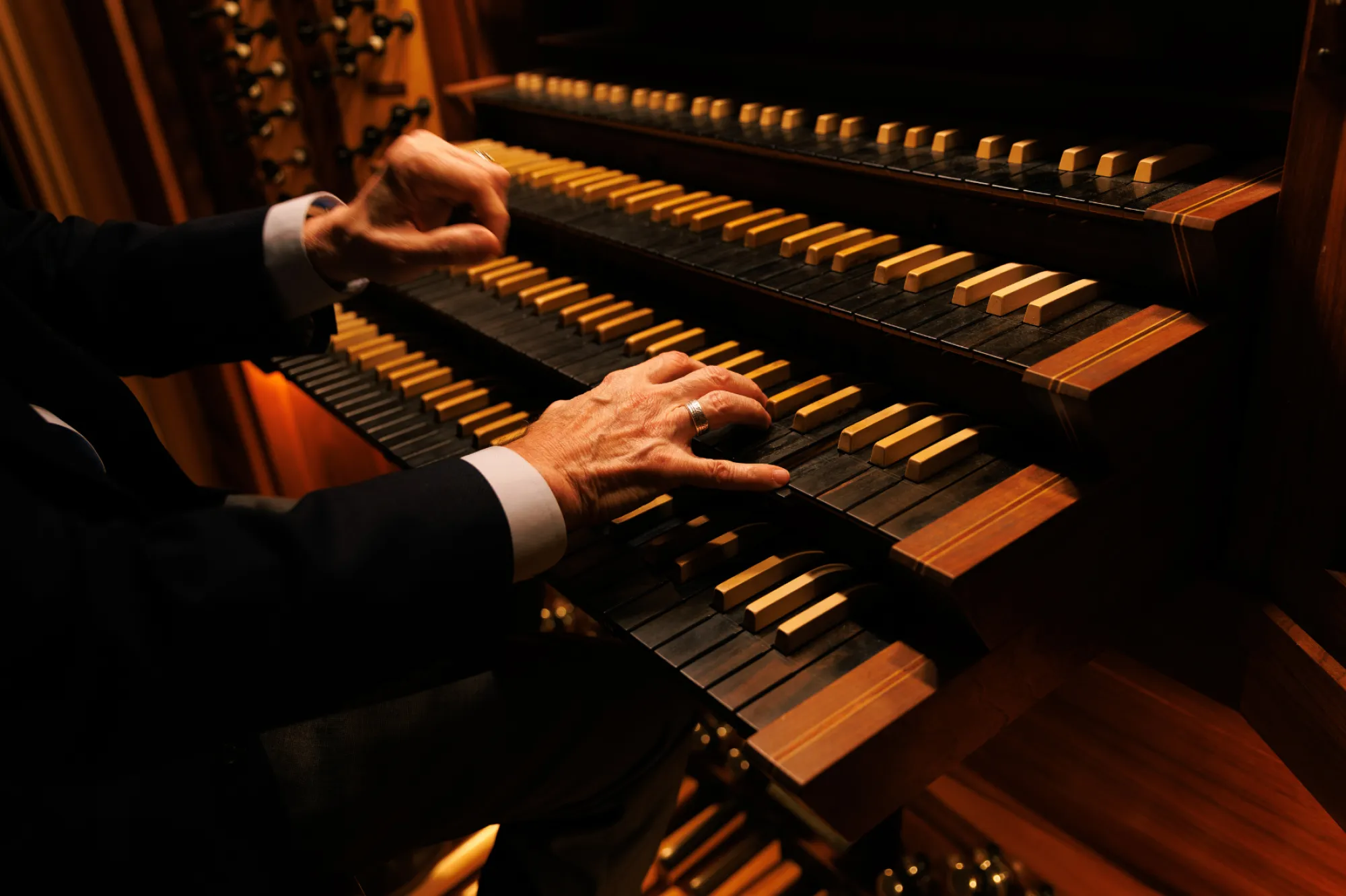
“You have to have both,” Korte said, referring to organ students and the instrument. “You can teach someone to play, but if the instrument isn’t there or isn’t working, you’re not going to build a program.”
For Korte, the organ’s significance extends far beyond a single discipline.
“It’s not just for the organ program,” he said. “It’s an instrument for the School of Music, for the University and for the city of Austin.”
That broader vision reflects the role the organ plays across performances, from solo recitals to choral and orchestral collaborations. It is as much a community asset as it is an academic one.
But restoring the instrument is only half the equation.
When Eaton arrived at Butler, the organ program had effectively disappeared. Today, it is growing again, with around 10 students currently in the program, many of whom discovered the organ after beginning their studies in other areas, such as piano.
“There’s real interest,” he said. “Once students encounter the instrument, many of them are drawn in.”
That renewed interest comes at a critical moment. Across the country, and especially in growing cities like Austin, there is a shortage of trained organists. Churches, performance venues and arts organizations rely on them for religious services, weddings, funerals, concerts and events, but the pipeline of new musicians has thinned over time.
“We have an impossible situation trying to find organ substitutes,” said Tim Wilborn, a veteran organist who has financially supported the organ program. “We haven’t had students, and it can be very difficult to find people to fill in.”
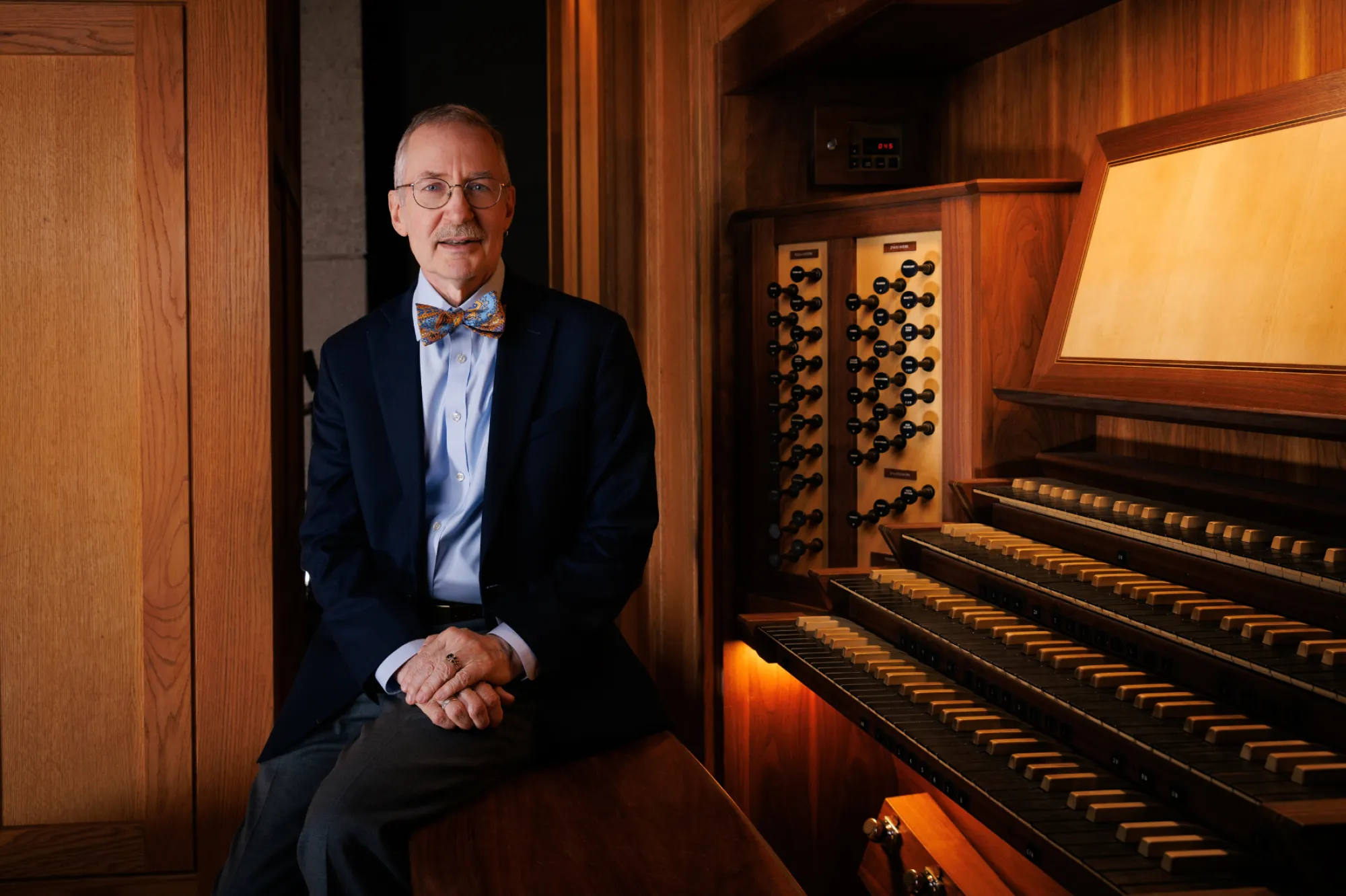
Wilborn, who has played organ professionally for decades and in venues around the world, sees Butler’s program as part of the solution, not just for the University, but for the broader musical community.
A revitalized organ program means more than classroom instruction. It creates a pathway for students to enter a f ield where opportunities are plentiful, but preparation is demanding.
“It’s a complex instrument that can take years to learn,” Wilborn said. “But that’s also what makes it so rewarding.”
Despite its long association with church music, the organ is far from limited in scope.
“The organ isn’t just a church instrument,” Eaton said. “It can work with orchestra, voice, contemporary compositions. It’s incredibly versatile.”
At Butler, that versatility is reflected in performances that pair the organ with ensembles, soloists and new works. Composers continue to write for the instrument, exploring its vast range of sound and its ability to fill and transform a space. A pipe organ’s precision can even support and amplify specific sections of an orchestra by using certain sound frequencies. 22
“There’s a misconception that organ music is limited,” Thomas said. “In reality, it’s a living, evolving art form.”
That evolution is key to the organ’s continued relevance. For students, it means opportunities to engage with both tradition and innovation. For audiences, it means encountering an instrument capable of surprising range, from the softest sustained tones to a full, rib-shaking roar.
It also opens the door to new audiences, many of whom may never have experienced a pipe organ in person.
“There’s a whole audience that’s never seen or heard a pipe organ,” Wilborn said. “The possibilities are expansive.”
For Korte, the impact of the restoration became clear during a recent performance. After an initial round of repairs last year, he attended a concert in Bates and heard the instrument in its renewed state.
“Some of the sounds coming out of that organ — I couldn’t believe it,” he said. “I was just so happy hearing what it could do.”
That reaction captures what is at stake in the restoration effort, not just functionality, but the return of a voice that had been fading.
Eaton plans to feature the organ in upcoming performances, including the school’s holiday concert, an opportunity to showcase both the instrument and the students learning to master it.
“There’s nothing like hearing it in that hall,” he said.
For Thomas, the significance of that moment extends beyond any single performance.
“This instrument connects our past to our future,” she said. “Restoring it ensures that students and audiences will continue to experience its power for decades to come.”
In Bates Recital Hall, the giant is no longer silent. It is breathing again, filling the space with sound, and with possibility for the future.