



Sacred Calling, Serious Career
As demand continues for organists, choir directors and worship musicians, sacred music provides flexible career pathway for Butler School of Music alumni
Words by Esther Robards-Forbes Photograpy by Emily Kinsolving
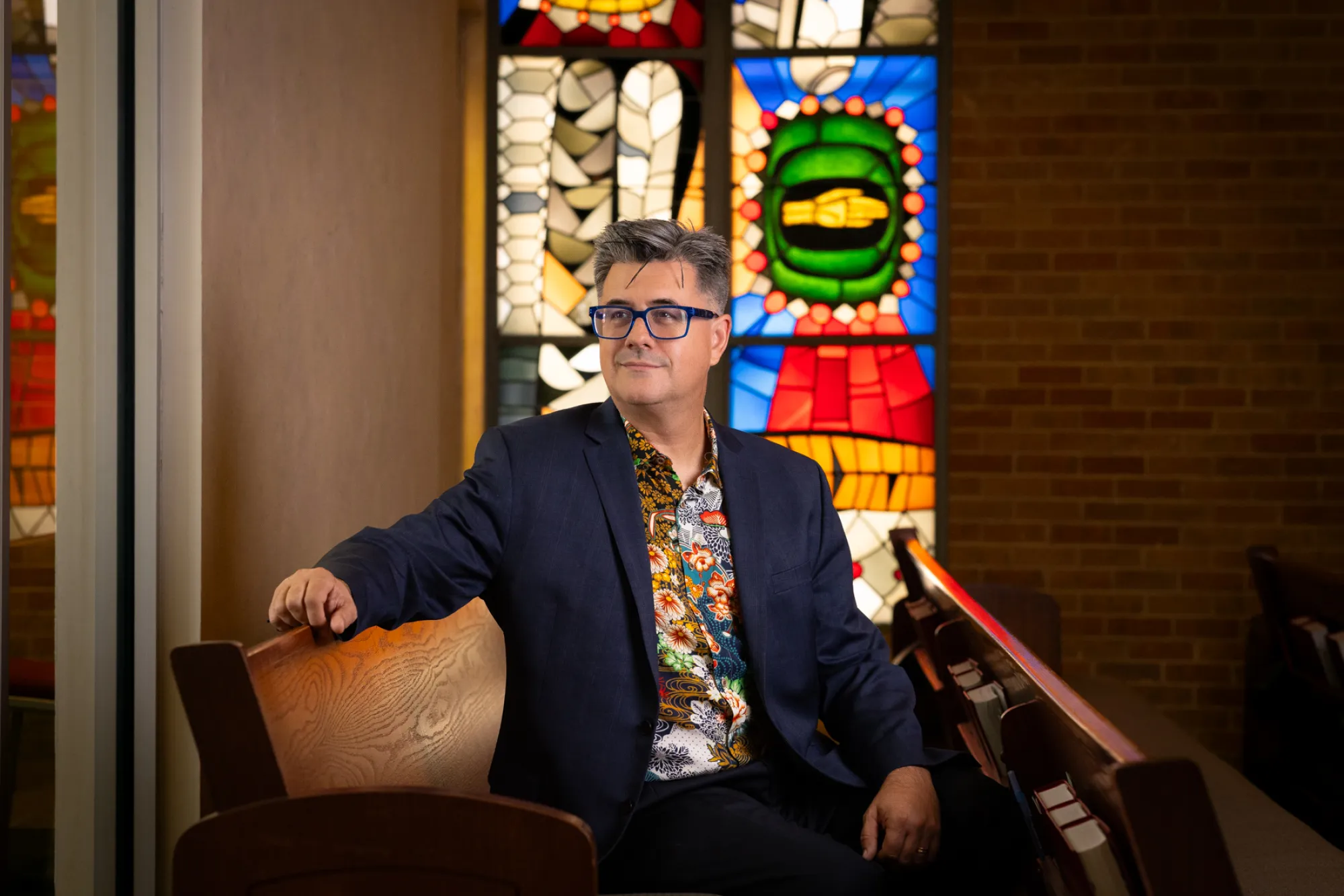
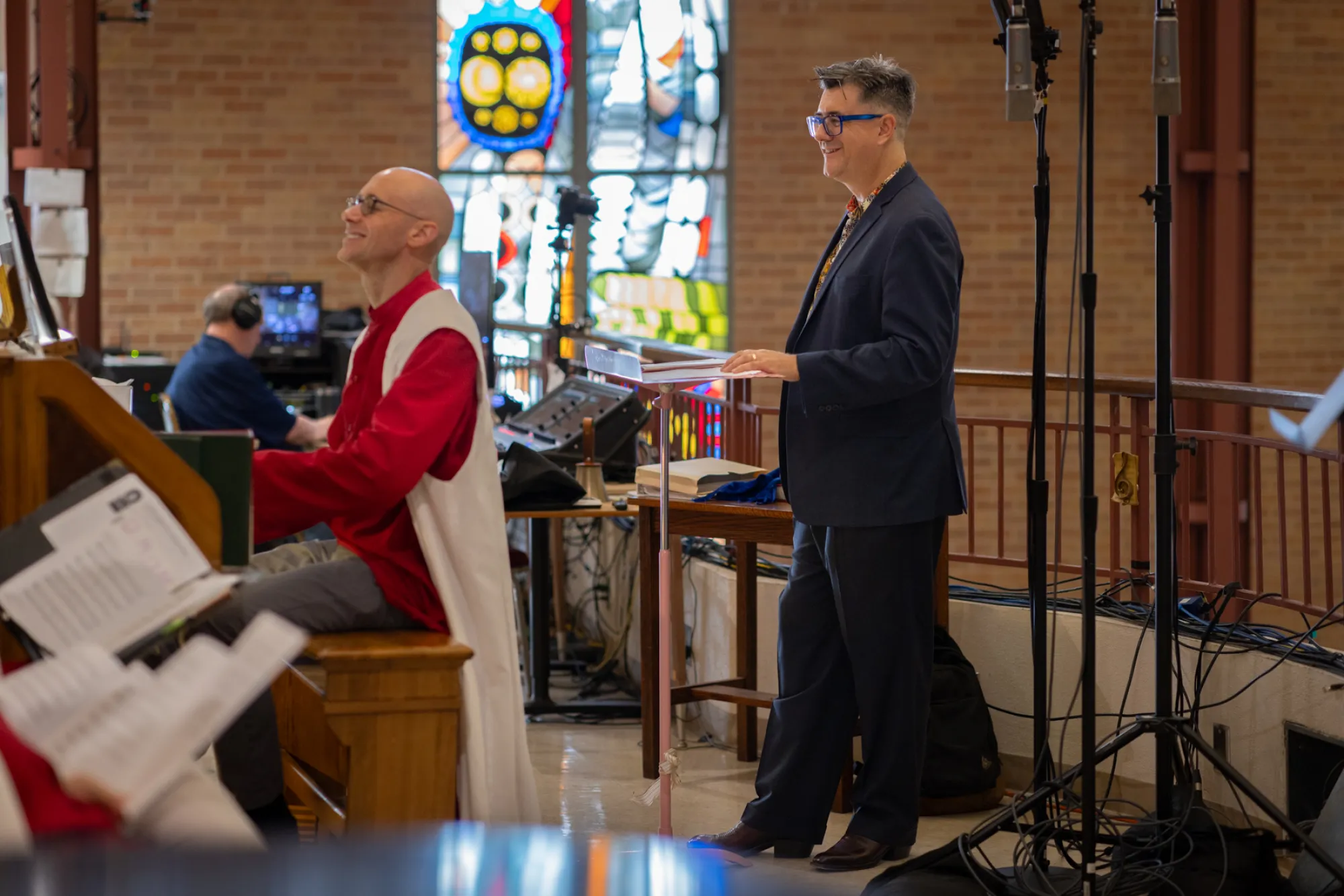
On a recent Sunday at St. Martin’s Lutheran Church in Austin, alumnus Tim O’Brien was in the choir loft, conducting singers through a rehearsal. In a few minutes, the empty pews would be filling with church goers, and the singers would be adding their voices to the worship service.
This is a special service. The St. Martin’s choir is off most Sundays during the summer, but they have come back for a special summer choir service featuring choral music of Mozart. These musicians are all happy to see one another after a few weeks of early summer rest. During most of the year, they provide music for St. Martin’s and its members every week. O’Brien (D.M.A., Music, 2019) has been organizing music selections, sheet music, equipment and performers. It’s all part of his job as music director at St. Martin’s, but it’s only a small part.
“This job is part project manager, part talent manager, part conductor, part musician, along with being a spiritual counselor,” O’Brien said.
The use of music in religious practice and worship is as old as organized religion. It spans across faiths, denominations, languages and borders. Sacred music as a career path is almost as old and expansive. From music directors and choir leaders to organists and solo performers, sacred music offers a variety of work opportunities from full time to part time and gig work, and professionals within the field said more music school students and graduates should consider it.
Music is a powerful tool to bring people together. Voices singing the same notes, the same words, create a shared experience.
“The building puts us in the same place together,” O’Brien said. “The music puts us in the same moment together.”
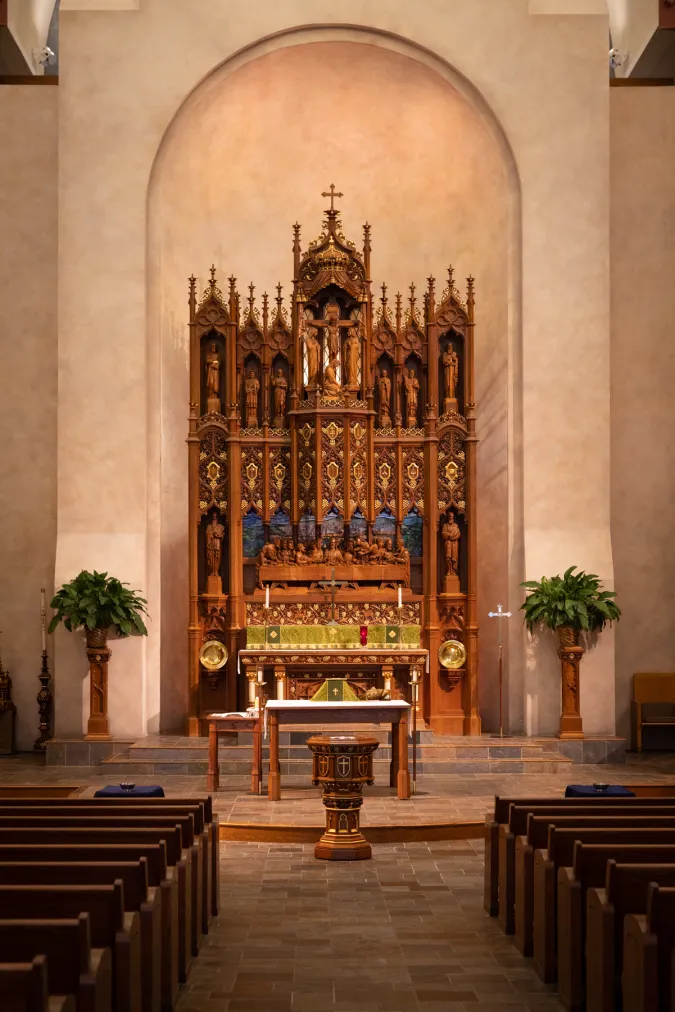
In an age of increasing isolation, loneliness and ever-present screens, many people are searching for a sense of connection, sacred music professionals said, and creating music together is one of the best shared experiences. Sacred music programs also bring together people who might otherwise never interact. Choirs often include singers from multiple generations, backgrounds and professions. A retired engineer may sing next to a high school student. A physician may rehearse alongside a teacher. Through music, those differences become secondary to the shared goal of creating something together.
“People want to be together. They are thirsty for community,” said Suzanne Pence, music director of St. Michael’s Episcopal Church in Austin and professor emerita at the Butler School of Music. “And every human can sing.”
For those interested in the career path, professionals in the field suggested studying sacred repertoire and choral studies. Sightreading is a must, and being able to play the organ is extremely helpful.
“There are so few people with that skill,” said O’Brien. “Organists are hired up and booked out so quickly. They are hard to find.”
The shortage is one reason Butler School of Music has renewed its investment in organ study. Church leaders across Central Texas seeking organists frequently contact music programs, creating opportunities for students willing to develop the specialized skill.
The responsibilities extend far beyond selecting music and conducting rehearsals. Music directors often manage budgets, coordinate volunteers, recruit performers, schedule rehearsals, plan special services and navigate the complicated dynamics that come with any community organization.
“There will be moments when you are thrown into pastoral care,” said Jeff Vanderlee (B.M., Music Studies, 2019), music director at St. Matthew’s Episcopal Church in Austin. “The music is only part of what we do.”
Vanderlee recalled receiving a phone call from a grieving family member shortly before a funeral service. What began as a conversation about hymn selections quickly became something else.
“About three minutes of that conversation were actually about the music,” he said. “The rest was emotional support.”
Those moments, he said, are common. While music directors are not trained pastors, they often find themselves helping people navigate grief, conflict, celebration and major life transitions.
One common misconception about sacred music is that it is not as exacting or challenging as other genres, but Vanderlee said musicians do not have to sacrifice artistic excellence when they move into sacred music careers.
“I don’t feel that I’ve had to sacrifice the integrity of my music making,” he said. “You can make it as rigorous as you would like it to be.”
In fact, sacred music offers musicians opportunities to engage with some of the most enduring works in the choral canon. Much of Western classical music was originally written for religious settings, from Bach cantatas and masses to contemporary sacred works. teaching at the university level, he realized the work he enjoyed most was not sitting in meetings or writing reports. It was making music with people.
The work also rewards curiosity. Music directors may find themselves researching composers, studying liturgy, teaching music theory to volunteers or exploring centuries of repertoire. Vanderlee writes weekly notes for his congregation explaining the history and meaning behind the music selected for services. For him, sacred music remains both intellectually and artistically engaging.
While the job can be demanding, it is also rewarding. Jobs in sacred music often involve seeing people connect with music on a spiritual level and using music to understand the humanity of those they may not agree with. The church choir may be the only opportunity for many people to learn how to sing.
Vanderlee did not initially envision a career in sacred music. After earning advanced degrees and teaching at the university level, he realized the work he enjoyed most was not sitting in meetings or writing reports, it was making music with people.
“I can see on a weekly basis what the music we create does for people,” Vanderlee said. “And while this job might not carry the prestige of academia or the concert circuit, it is deeply rewarding in so many ways. And it does allow for f lexibility and work-life balance.”
While some churches struggle with declining attendance and others move away from the organ to a band with guitars and drums, the heart of what sacred music professionals do remains the same: offer people connection through music to the spiritual and to each other.
People will always need rituals such as weddings and funerals. They will still look for shared meaning and beauty in the words of a hymn, whether old or new. And they will still need someone to lead them in song.
“These hymns have a way of storing meaning,” O’Brien said. “In this work, your return on investment is in terms of your spiritual life, your sense of purpose and your sense of contribution.”