



Playwright and alumna returns to UT to summon Harry Houdini
Like any seance, it started with a message from the dead.
Boom, you!
Two lonely words scrawled on a postcard from Harry Houdini to another magician. Playwright Katie Bender found it in the Harry Ransom Center’s Houdini archive, a century-old artifact that would spark her one-woman show, Instructions for a Séance, her meditation on escape, artistic ambition and motherhood.
“It was like getting a text message from the past,” Bender said. “The bombasity, the cadence of it, I could hear Houdini’s voice, or at least my version of his voice. It’s rare that actually happens, that you get the spirit.”
Bender had just graduated from The University of Texas with an M.F.A. in playwrighting when she first heard Houdini’s voice in the archive. Nearly a decade later, she’s bringing Instructions for a Séance back to campus, this time in the Bass Concert Hall Rehearsal Room at Texas Performing Arts as part of Fusebox Festival.
The play didn’t arrive fully formed. It began as a two-person piece about Houdini and his assistant, developed during a fellowship in Minneapolis. But during a later workshop in Seattle, as Bender read the script aloud, something shifted.
The room pushed back. The voice, they said, belonged to her.
It became a solo show featuring Bender.
Instructions for a Séance was first workshopped at Mohawk in East Austin in 2019 and has continued to evolve through productions at the Playwrights’ Center, the Alley Theatre’s All New Festival, Amphibian Stage and, most recently, Oklahoma City Repertory Theatre.
“There's actually a few monologues that existed in that original play and have always stayed with me,” Bender said. “They haven't been touched.”
But much of the show has.
“The piece needs to change so much for each space and each producer,” she said. “I haven’t figured out how to do a plug-and-play tour yet. I’m really remaking it for each new production.”
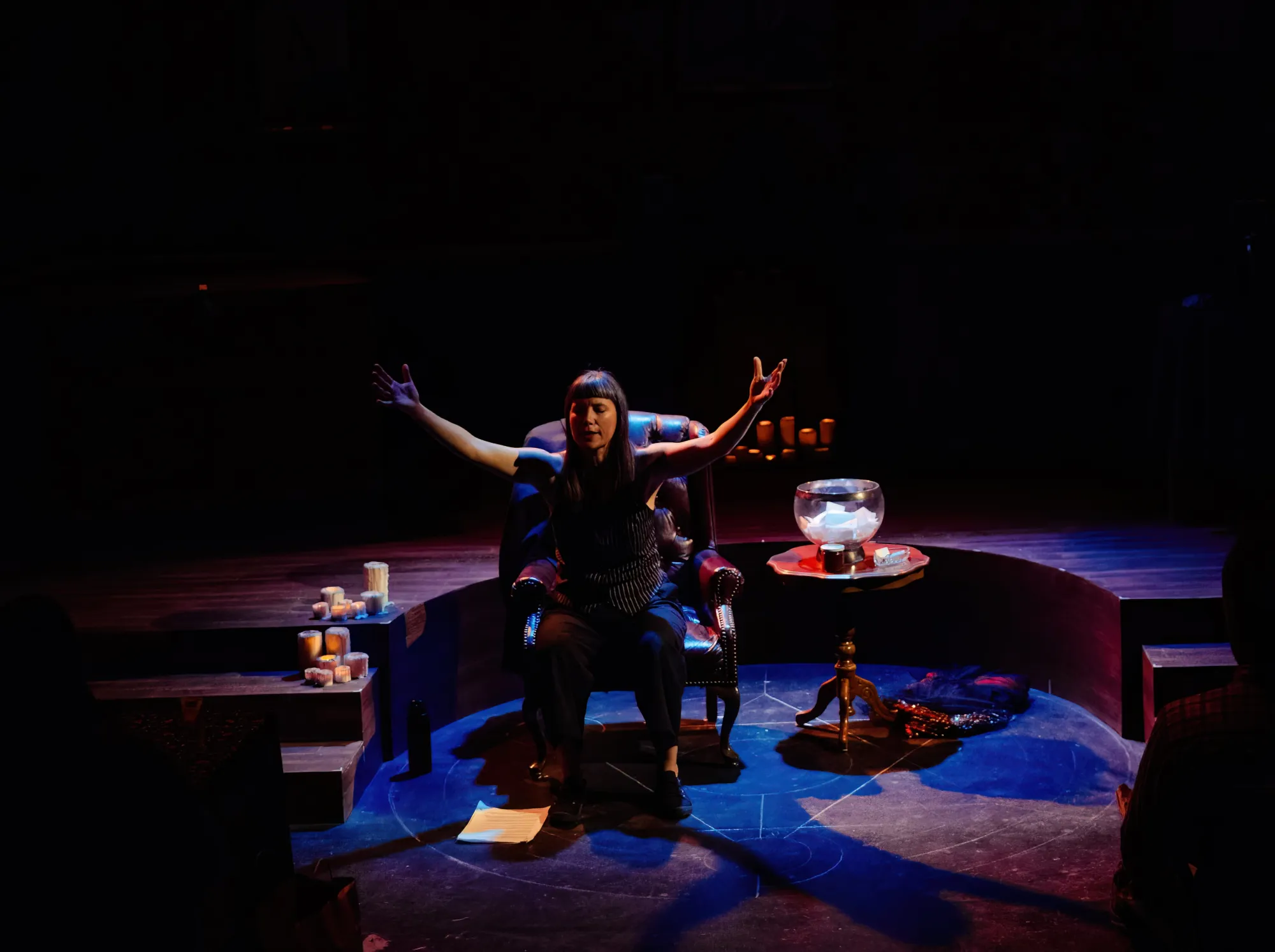
Bender didn’t just write Instructions for a Séance. She performs it, slipping between a semi-autobiographical version of herself and Harry Houdini, the escape artist whose voice first spoke to her in the archive.
In the show, she plays a struggling artist and mother staging a séance in search of a brief escape from her family life, borrowing (or claiming to borrow) artifacts from the Houdini archive in an attempt to summon his spirit. The production is often staged in intimate venues, where audiences become “guests,” invited to participate in small ways. No two performances unfold exactly the same.
“It’s so much fun,” Bender said. “I would never be cast as Houdini in a traditional production, so it’s a bit of a stretch for me, and I enjoy that tension.”
That tension runs deeper than casting.
“There's a lot about his relationship with ambition and publicity that troubles me,” she said. “It’s interesting to play him in conversation with my own relationship with ambition.”
For Bender, the question of ambition goes beyond the theoretical into lived experience.
She is raising two children with a husband who is also an artist. In their home, ambition is a negotiation.
“I’m really glad that my children have seen me put my artistry at the forefront of our lives,” Bender said. “That’s something I feel really proud of as a parent. I think that’s also become hard on our marriage, because my husband is also an artist. We are both always putting things at the forefront, and that means that one person's success means the other person has to perhaps not do the thing that they want to do, so that the kids can have a stable home.”
That tension between devotion and escape sits at the center of Instructions for a Séance.
In the show, Bender invites audience members to write down what they want to escape from, folding their private longings into the performance itself. The séance becomes less about summoning Houdini than about testing the locks we place on ourselves and our ability to break them.
For Bender, that desire was not abstract either. The piece began, in part, as an attempt to step outside the demands of motherhood and partnership, if only for an hour.
But over time, her understanding of ambition has shifted.
“What I’ve been discovering over the past couple of years is that the real value system is actually my family and the art that I make,” she said.
Houdini, it turns out, was asking many of the same questions about ambition, legacy and escape.
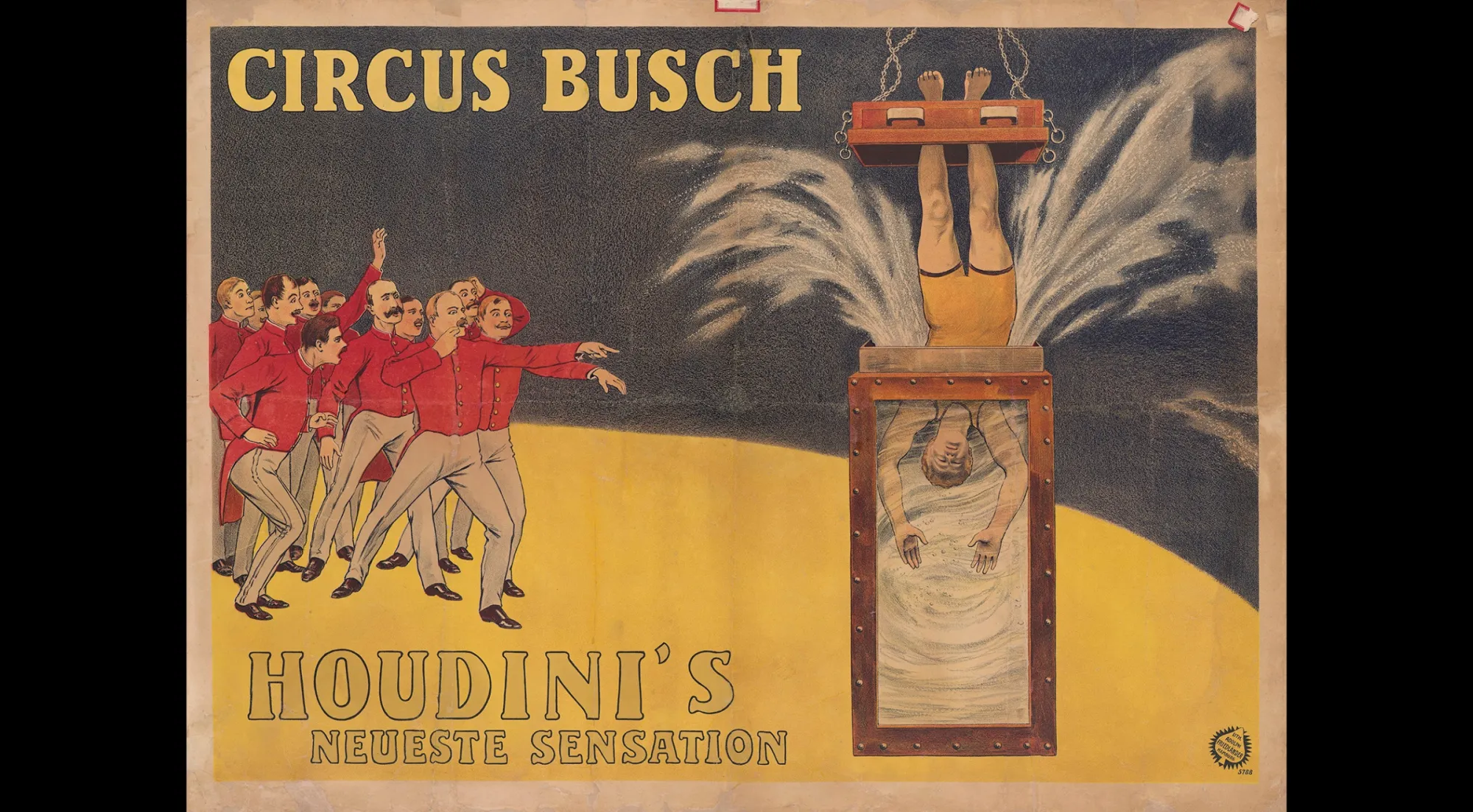
As Bender dug deeper into the archive, she began to see just how deliberately he had shaped his afterlife. For example, Houdini was obsessed with controlling the boundaries of belief. In the later years of his life, he exposed spiritualists and séances as frauds, even though he had previously borrowed many of their theatrical techniques for his own performances.
“The archive feels very clearly like his draft of settling himself in history for all time, and I have a lot of respect for the desire to do that,” Bender said. “What’s so exciting about the archives is that I can comb through Houdini’s papers, and the way I interpret them tells me as much about me and where I live now as it does about Houdini.
“Making art out of that feels like both a kind of respect for the artists whose shoulders we stand on, but also a push to reexamine who we are now. What does magic mean now? What does ambition mean now?”
For Bender, performance becomes a way of treating the archive not as a fixed record, but as something alive, shaped again each time it is read, interpreted and staged.
If the archive is a conversation across time, the performance is where that conversation becomes collective.
For Bender, live theater offers something increasingly rare: a shared, unmediated experience among strangers. In Instructions for a Séance, the audience isn’t passive. They are invited in as guests, asked to suspend disbelief and imagine a different reality together.
“I think live theatre is fundamentally necessary to our humanity,” Bender said. “It’s something ancient and profound, people gathered together and experiencing a story. It’s a construct we’ve agreed on, but we could just as easily agree on another. That kind of world-building is exciting for what we make of our future, and for imagining different ways of being human together.”
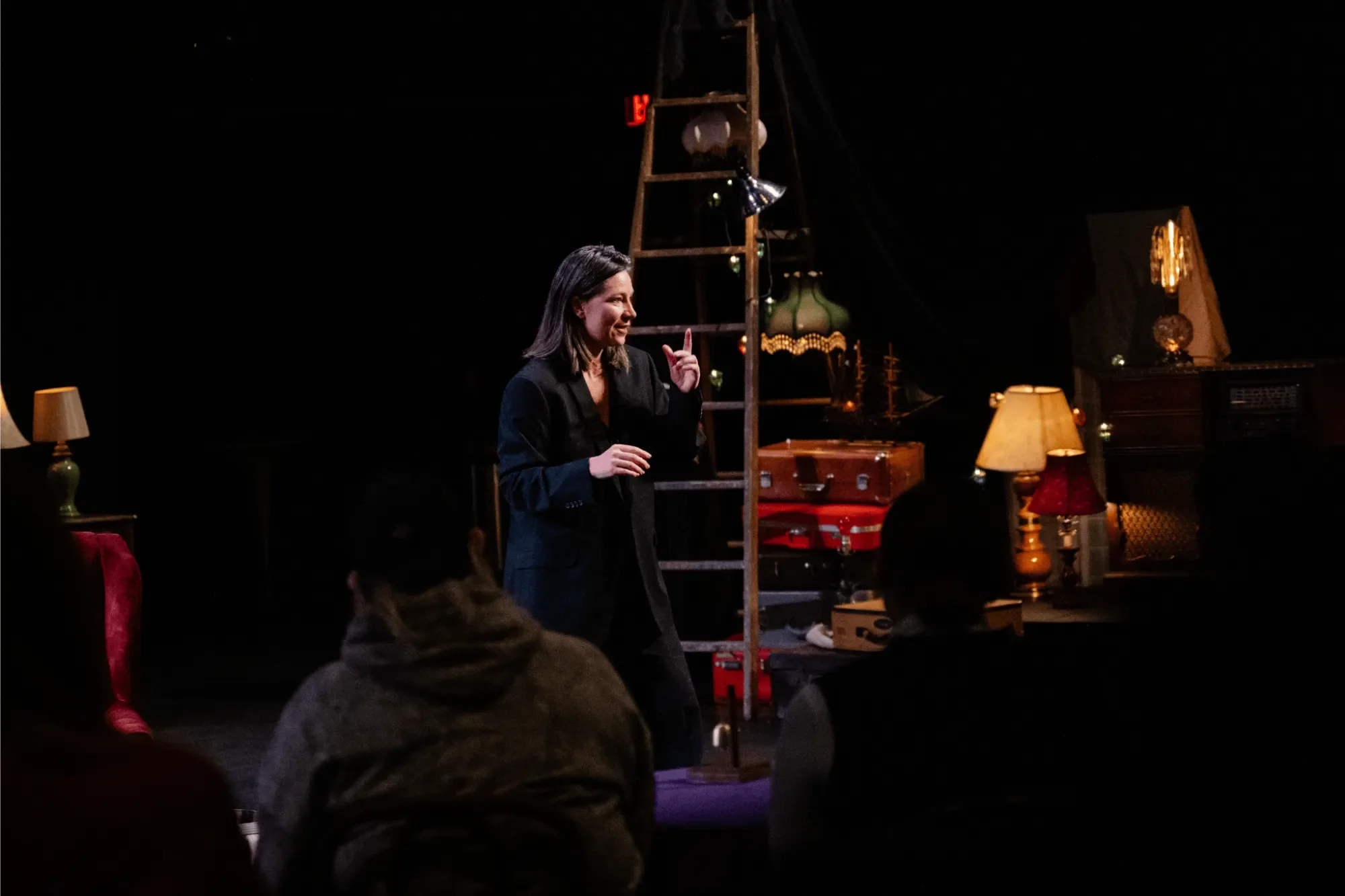
In many ways, the performance’s arrival at Texas Performing Arts feels like a homecoming long in the making.
Bender earned her M.F.A. at UT Austin, where she developed her voice as a playwright in conversation with mentors and peers who helped shape her approach to theater. It was also here, in the Harry Ransom Center, that she first encountered Houdini, not as legend, but as a voice waiting to be heard.
A decade later, Instructions for a Séance returns to the same campus where it began, now part of a broader moment marking the centennial of Houdini’s death.
“I'm really glad to be able to bring it back to UT and to be in a space that produces such incredible work and presents such incredible work,” Bender said. “It’s a gift.”
The piece itself has always been about escape: to the archive, to the past, to the questions that refuse to stay buried. Now, it returns to the place where those questions first took shape, changed, expanded and are still very much alive.