

Moving Mountains
Rude Mechanicals, theatre company in residence, revisits and refines devised theatre work Not Every Mountain
Words by Alicia Dietrich
Photos by Robert Silver
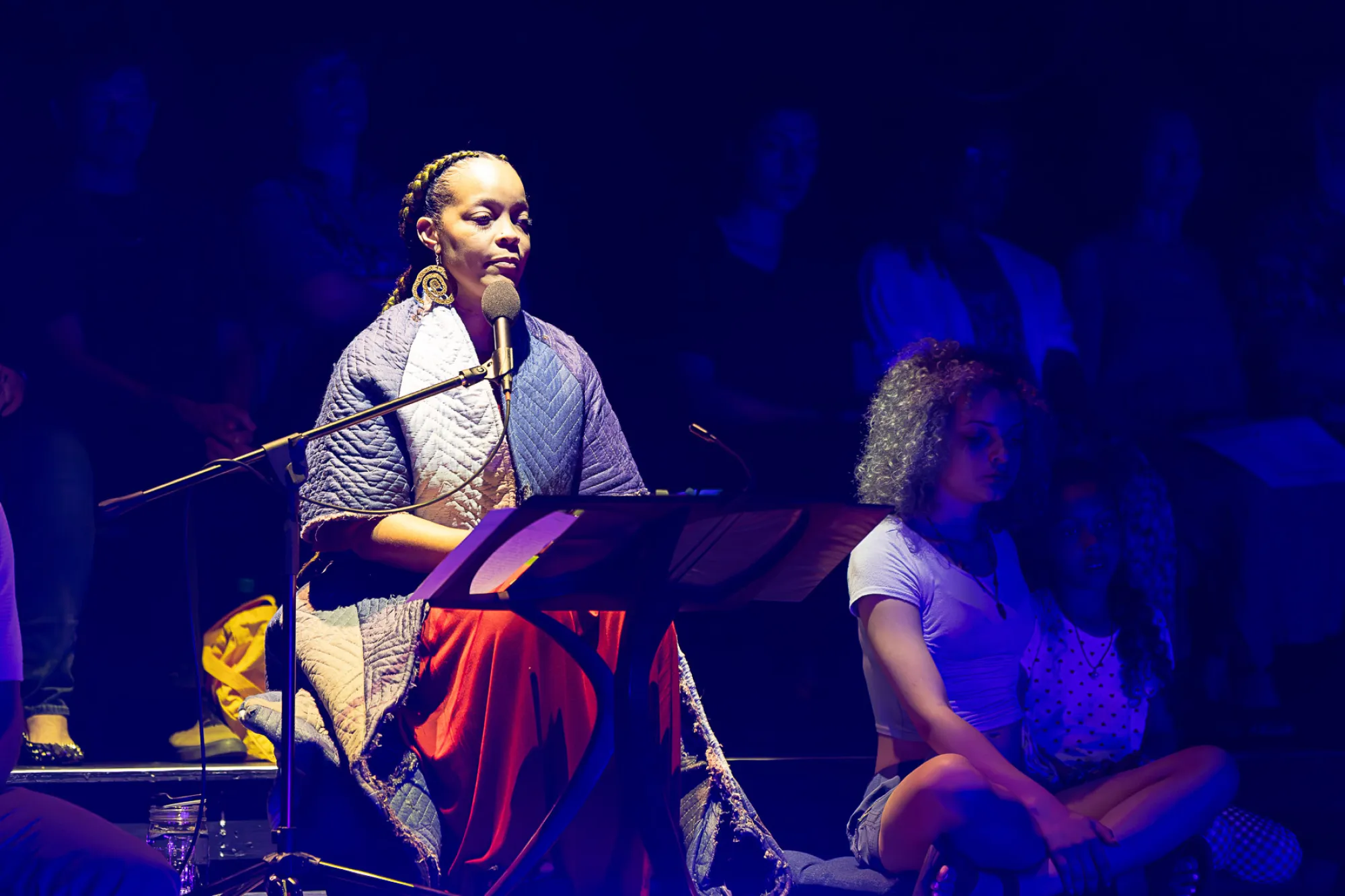
Not every mountain is on every map.
Not every mountain can control itself slowly.
Not every mountain has a throttle.
Not every mountain would want the history of its fires told.
Not every mountain is a good mountain.
Not every mountain considers itself all that big.
Not every mountain wants to be remembered for its behavior at parties all those years ago.
Not every mountain wants you to go down on it.
Not every mountain wants to be thought about as a logo for our era.
Not every mountain knows the earth is a museum of dying things.
Not every mountain is lying on its back looking up at the clouds
—some mountains are hiding their faces in the earth and crying.
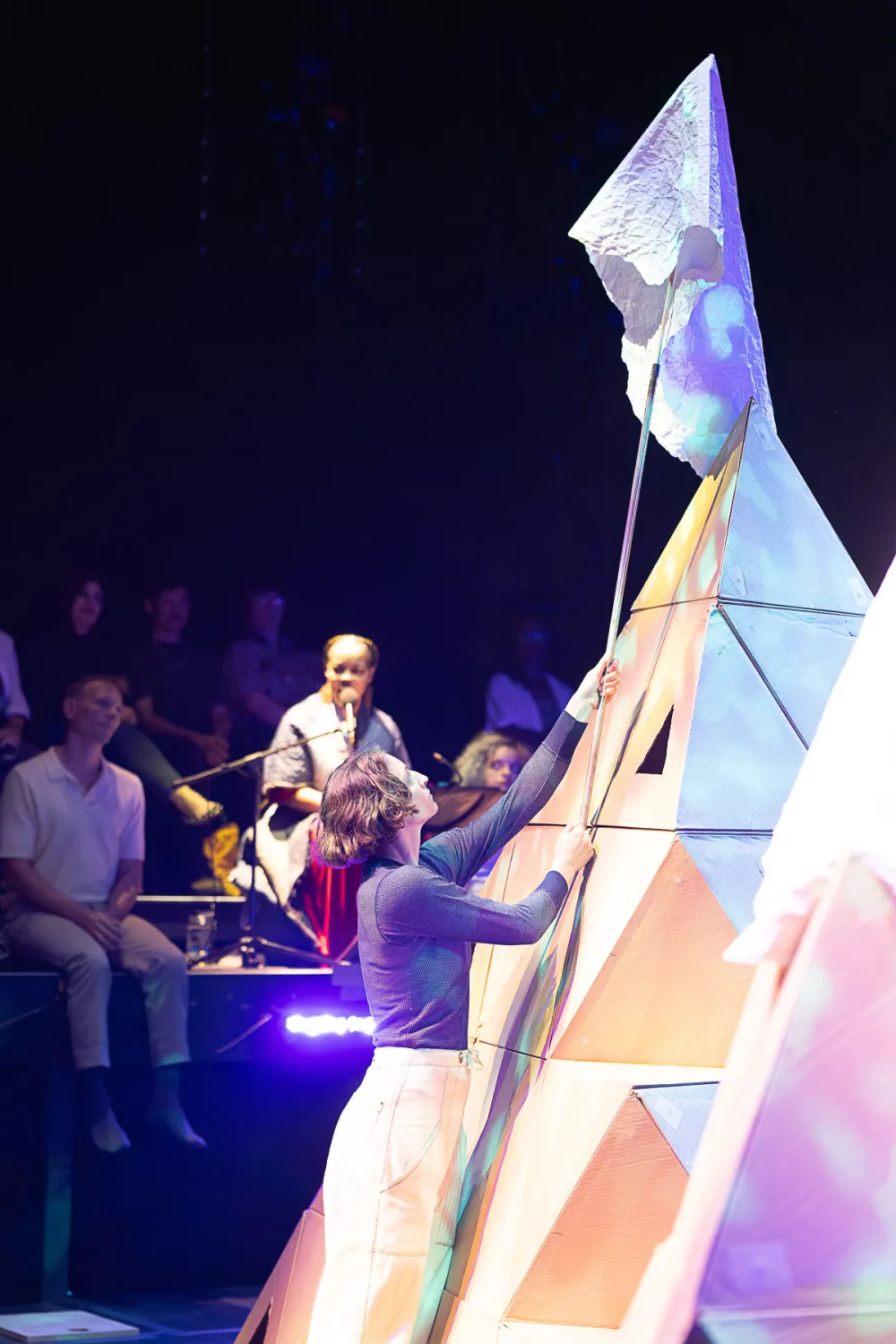
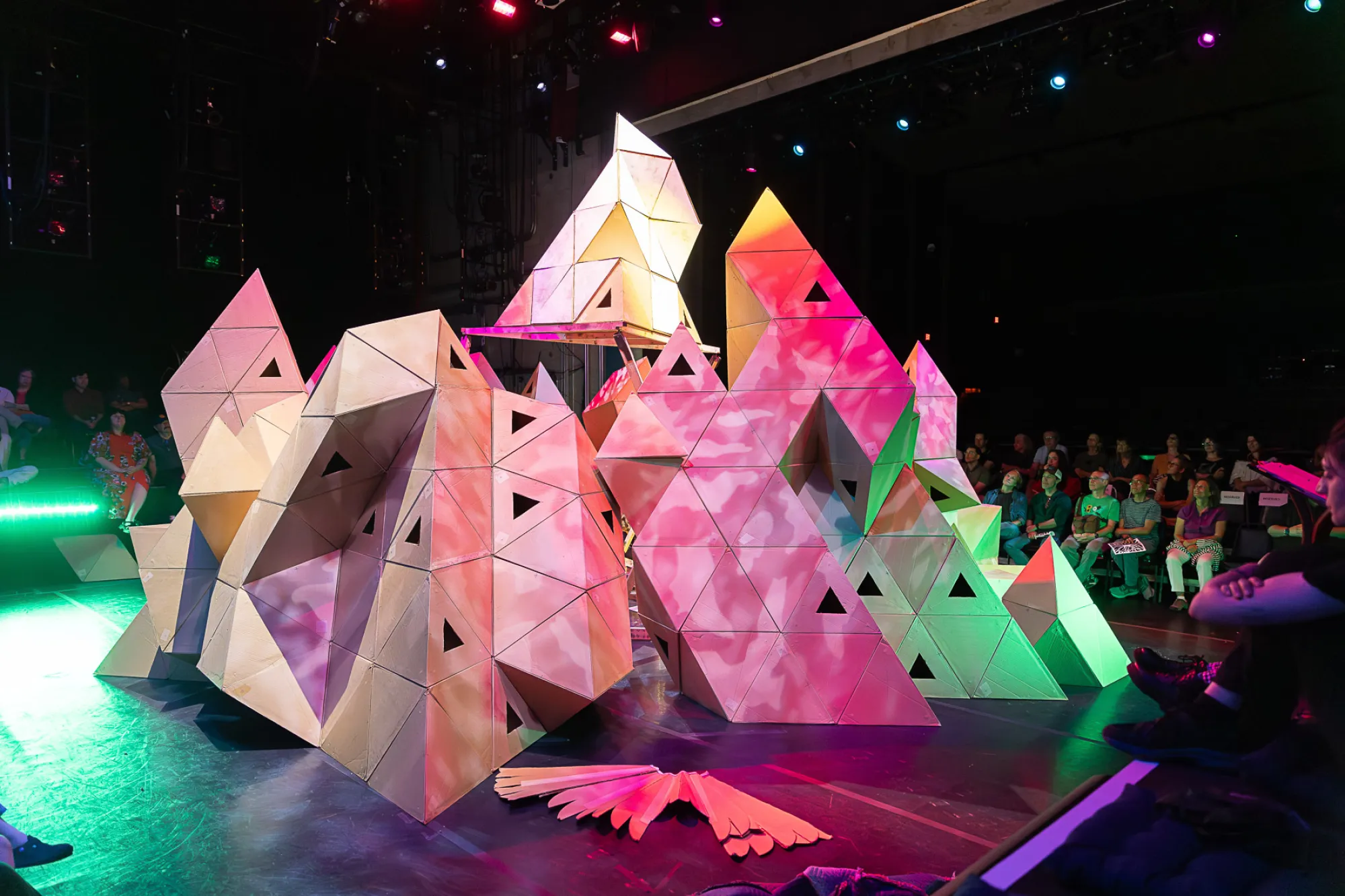
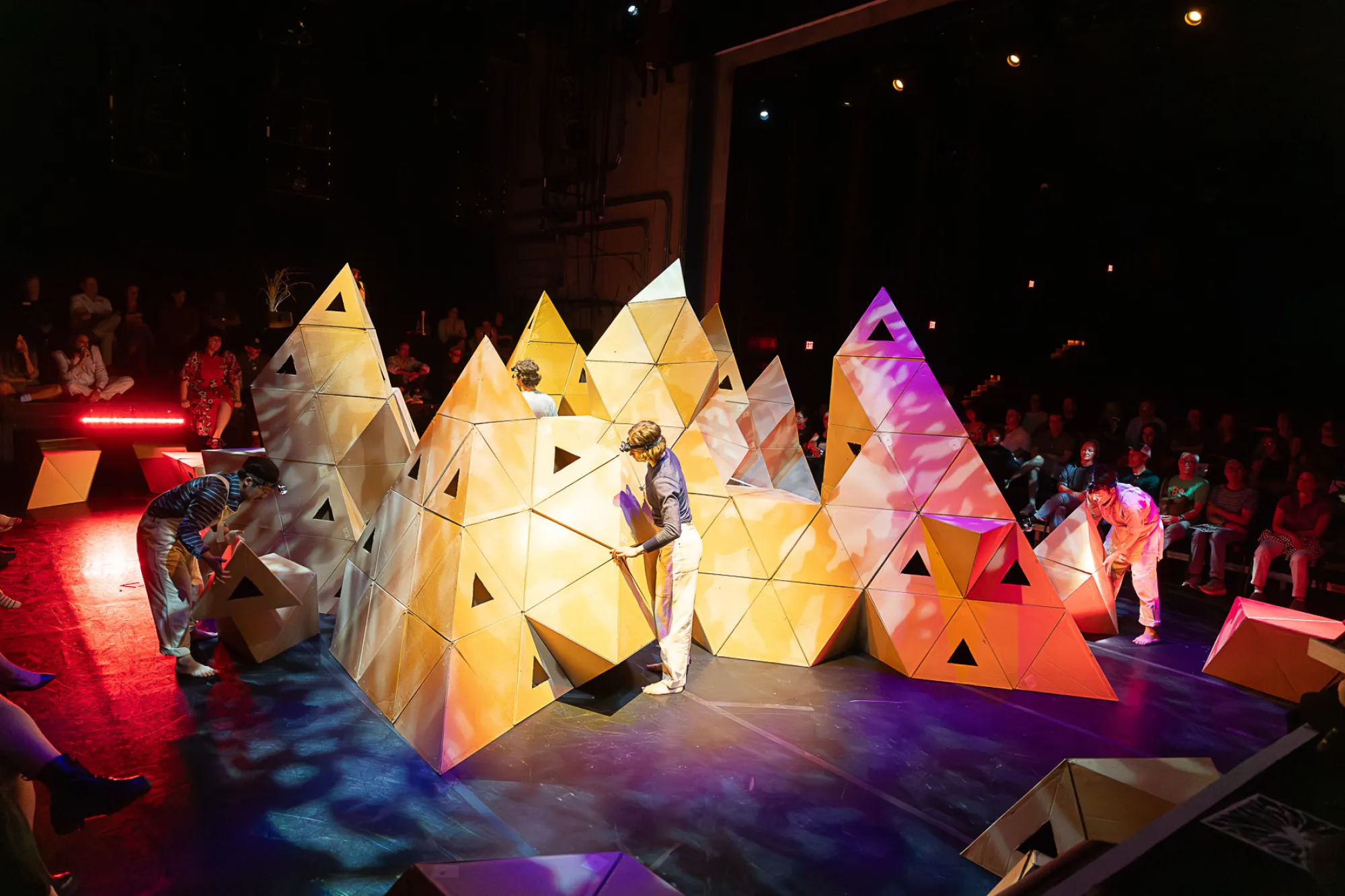
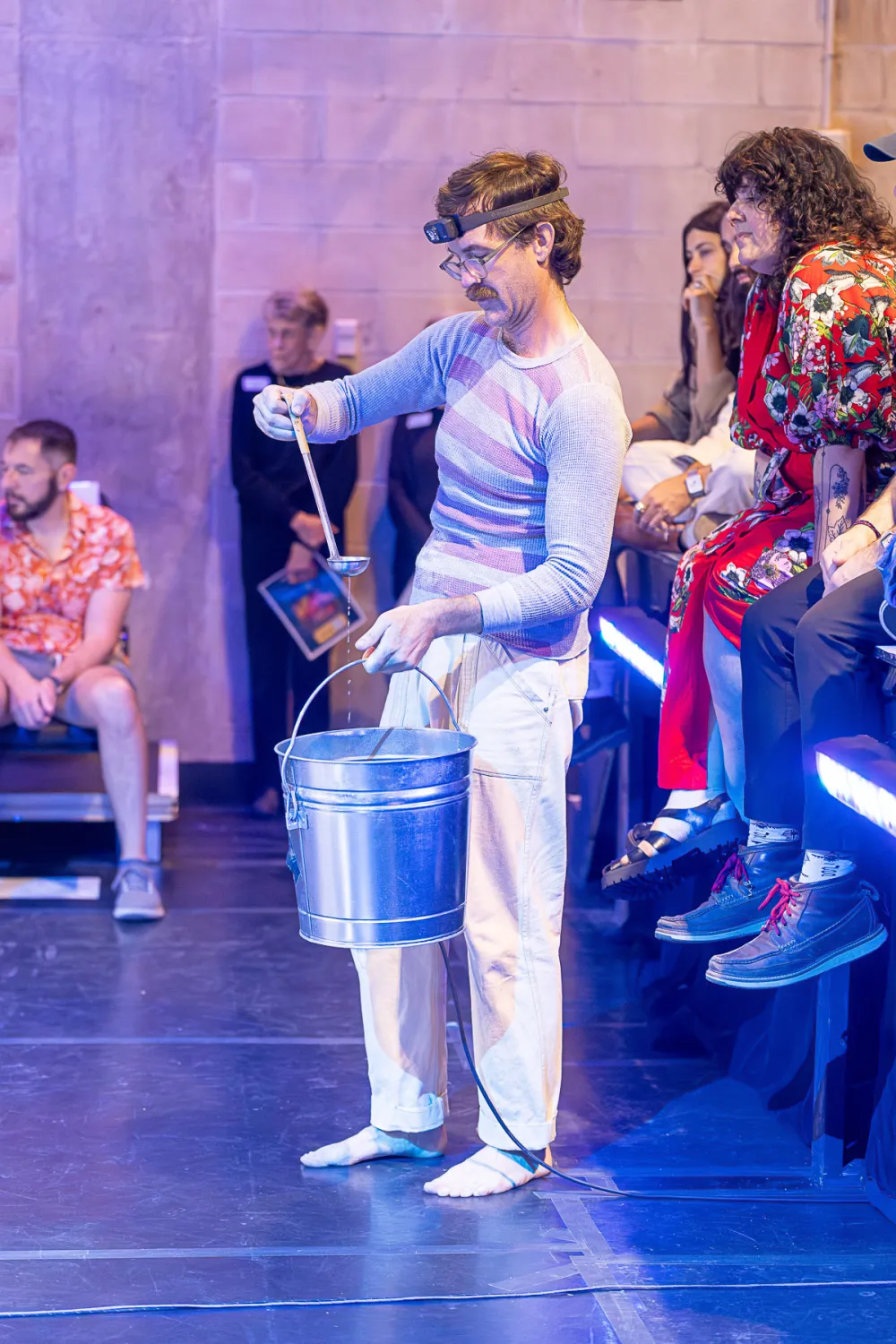
Lines from the poem wash over the audience seated in the round on the B. Iden Payne Theatre stage as cardboard mountains click together with magnets to slowly take shape, grow and morph through tectonic shifts over 90 minutes. Performers dressed in neutral colors move the mountains across the stage with simple props — a levered crank with string, wooden tools, a mechanical lift. A handful of cotton fluff cupped in a performer’s hands drifts past a mountain as a cloud, and a different performer spritzes audience members with ladles of mountain rain and a small smirk. A leaf blower moves a snowcap on top of a mountain. The effect is pure theatrical magic in its simplicity and execution. The performance is both profound and whimsical, a meditation on the passage of time and impermanence.
This spring, the Austin-based Rude Mechanicals theatre collective resurrected their devised theatre piece Not Every Mountain for two back-to-back residencies and a series of sold-out performances in Austin and San Antonio. Two residencies with Texas Performing Arts and Trinity University gave the collective time and space to refine the show, with an eye toward a tour to expose new audiences to it.
2026 marks a 30th anniversary for the Rude Mechanicals theatre collective, and the milestone gave them an opportunity to reflect on where they’ve been and their future. The Rude Mechs are the resident theatre organization in the Department of Theatre and Dance, and three members of the collective are also faculty members: Professor Kirk Lynn, Assistant Professor of Instruction Madge Darlington and Assistant Professor of Practice Alexandra Bassiakou Shaw.
It had been almost a decade since the collective created Not Every Mountain in 2017 as they worked through complicated feelings about losing their artistic space at the Off Center. The show was a hit with Austin audiences and critics at a series of Fusebox Festival performances in 2019, and they planned to take it to The Momentary at Crystal Bridges in 2020. Then COVID-19 hit, the residency was canceled, and the show was backburnered for a few years.
The Texas Performing Arts residency allowed the collective to revisit and develop the piece by offering rehearsal and workshop space, along with production support, ahead of the Austin performances at Fusebox Festival in April.
“Something magic happens for me when we really meditate on our smallness in the great scale of time,” Lynn said. “You actually really feel the preciousness of your friends and family and end up being in this collective moment together with other audience members.”
The show’s concept originated with co-producing artistic director Thomas Graves, who had an idea about working with cardboard, and Lynn, who’d been working on a poetry text called “Not Every Mountain.”
“We would sit in a dance studio at Winship, and he would read that text, and I would just go around and pretend to be moving cardboard, which hadn’t been made yet,” Graves said.
When the company was working on the piece initially, they were in a temporary space and wanted to create lightweight set pieces that could be easily collapsed and stored until they found a more long-term creative space. Graves worked with his friend Pete Dahlberg to figure out a cardboard object that could be mass produced and that clicked together. They landed on two complimentary shapes — octahedron and tetrahedron — and added magnets to connect the shapes of cardboard to build three-dimensional landscapes. (The shapes will be recognizable to anyone walking past Tony Smith’s Amaryllis sculpture in the Landmarks collection outside MRH and PAC on campus.)
“Then we just got in a room with eight people, and we had this object and asked, ‘What can we do with it?’” Graves said. “We had a month where we just experimented in all kinds of different ways of like, ‘What can this object do? What could this show be?’ And that’s how Not Every Mountain came to be.”
The Rude Mechs are probably best known for their work The Method Gun, and Graves said that one of the reasons he thinks that play was so successful was that they had a monthlong residency with the Humana Festival to polish and refine the work. The company thought about what they could do with Not Every Mountain if they had the space to give it that kind of focused attention, and they lined up two back-to-back residencies this year — first with Texas Performing Arts and a second with Trinity University in San Antonio.
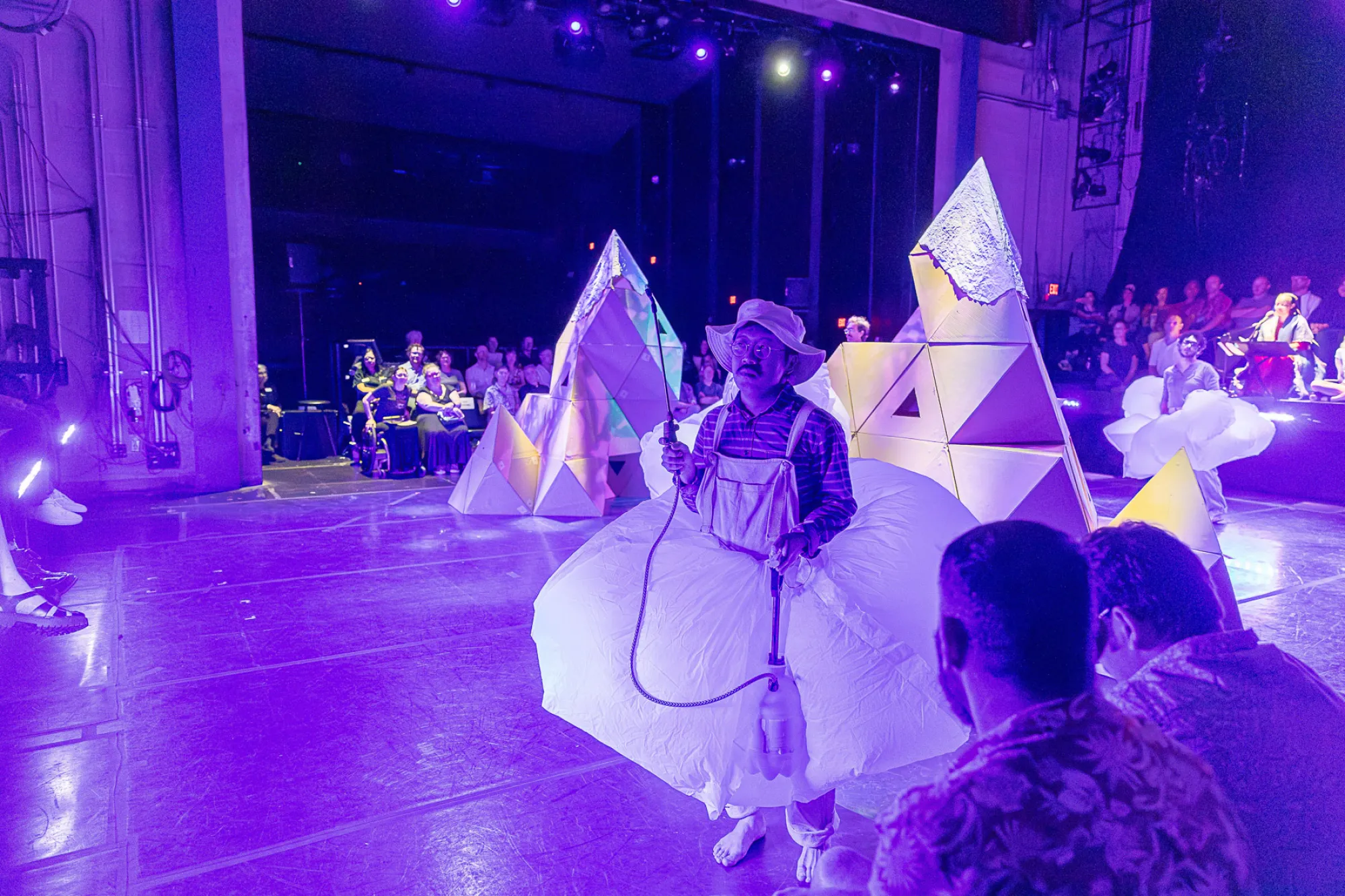
In their residencies, the creative team wanted to focus on refining the beginning of the show, as well as the structure of the final build of the mountains and the movement and pacing it takes to get the landscape to its final form. While Kirk and Graves admit that they will probably continue to tinker with the show, the opportunity to take time and space to refine it made it a stronger show.
The company is hopeful that the show will continue to reach new audiences with a tour next year, though they were still in preliminary talks with possible presenting partners at press time.
“If one of its meditations is on the nature of time, I think revisiting it does a wonderful thing, both for audiences and maybe for us, that you can see time pass in that way,” Lynn said. “The performance is also quite liquid. You can’t really hold on to it because there’s not a story. I can’t reread murder mysteries or watch most movies a second time because I sort of know how they work and understand them. But poetry or performance often has that liquid feel of like, ‘Oh yeah, I’m just back in the flow.’ Maybe like canoeing, it can’t be the same river twice, as Heraclitus said.”