



Creative Careers: Raul De Lara on Community, Sculpture and the Long Game of Studio Practice
by Esther Robards-Forbes
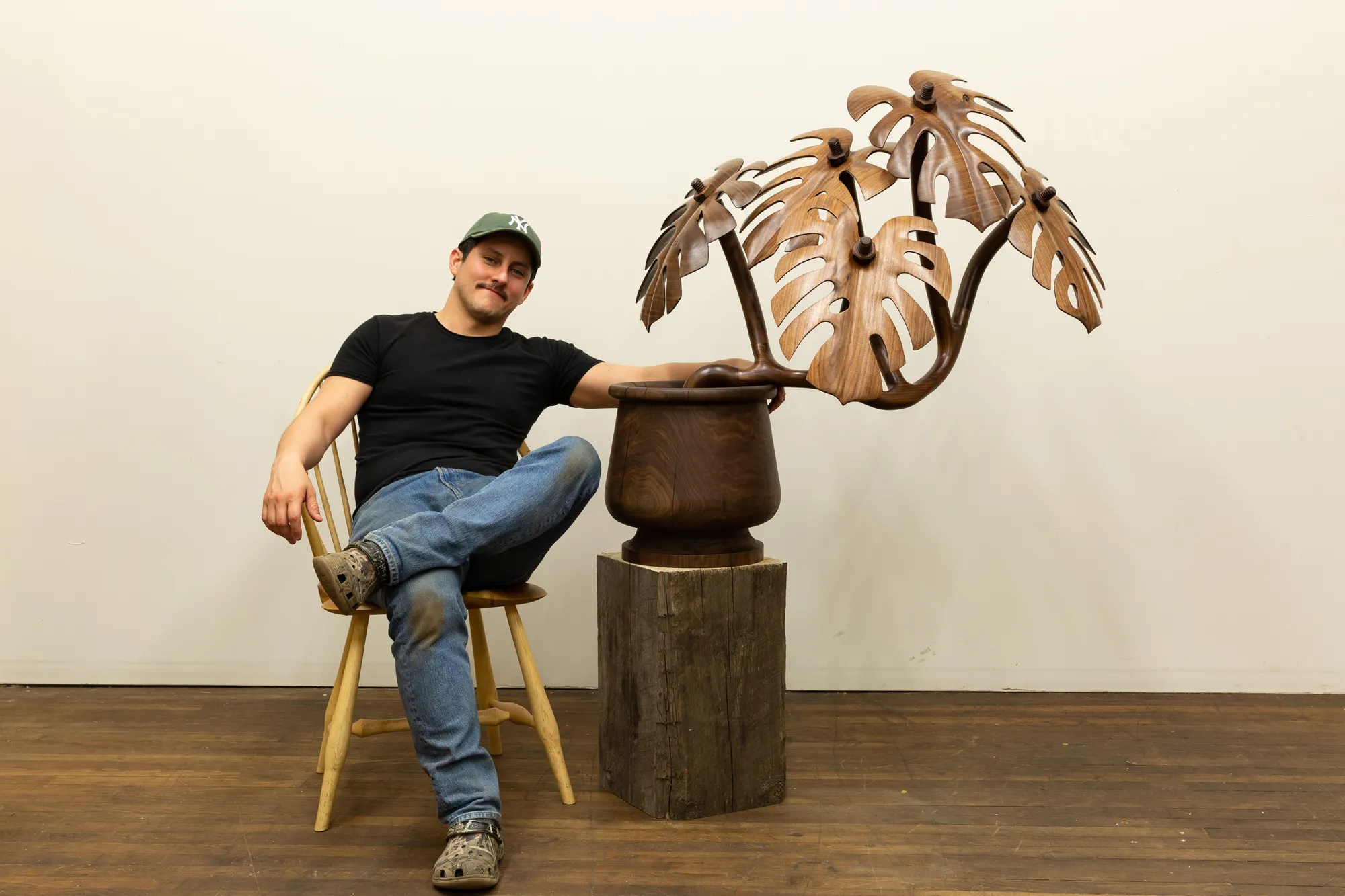
Sculptor and woodworker Raul De Lara (B.F.A., Studio Art, 2015) builds work that is as precise as it is personal, shaped by craft, community and lived experience, while never losing a sense of whimsy. From the UT Austin woodshop to artist residencies, shared studios and a recent solo museum exhibition at The Contemporary Austin, his career reflects persistence and a deep commitment to his craft. In this Q&A, De Lara reflects on his journey from UT Austin to New York, the realities of studio life and the experiences that continue to shape his work.
Your recent solo exhibition in Texas marks both a major professional milestone and a personal homecoming. What did this exhibition represent for you at this stage of your career?
Being able to show work at the museum (The Contemporary Austin) I grew up seeing as my beacon of contemporary art was a dream come true and also a serious responsibility. I got to share my work with the communities that saw me learn English and watched me move through different phases of early adulthood. I got to invite the BMX scene I so dearly loved and still do, my family, close friends from jobs I held as a teenager and artists in the community who I admire and respect. Even my high school art teachers came to the opening.
When I was asked to present my work there, I started thinking about what it means to speak from my position in today’s America where immigrants are being both recognized and demonized. In many ways, Mexico is a backbone for Texas, so I wanted to acknowledge that and talk about our relationship to immigration.
I was undocumented for my first eight years in the United States, including my first year at UT Austin. I was able to apply for DACA during my time at UT, and it gave me a stronger sense of purpose and safety. How does one act, and how does one share such sensitive parts of their story in a state where people might see it exactly like their own story or exactly against their politics?
The exhibition revolves around the idea of how flowers can be native to two countries, but people cannot.
How did your time at UT prepare you for the career that you have now?
I started in the Design program and eventually switched to Studio Art. I was fortunate to have teachers who really believed in me during my time at UT. They encouraged self-discovery and knew how to push me just enough to help me develop my creativity in my own way.
As much as I didn’t understand it at the time, being asked to write an artist statement helped me with the lifelong need for writing in this field. The more I wrote, the more things started to make sense.
Khan and John in the woodshop were also huge inspirations and a big source of support. They always encouraged my learning of tools, techniques and ideas without judgment or intimidation. Woodshops can be intimidating places to learn, but they made it inviting and exciting.
UT offered an NYC trip, which opened my eyes to the world. It was the first time I had left Texas, and I couldn’t believe how magical things could be elsewhere.
I was also given a summer course at Ox-Bow, and I didn’t know it at the time, but that opportunity would shape the rest of my life. I hope UT still offers those two opportunities to students because they had a tremendous impact on my life.
After graduating, what were the first concrete steps you took to build a sustainable studio practice? What did those early years really look like?
I knew I needed to find a way to keep making work and to stay connected to other artists. I wanted a live/work space, but I didn’t know how to make that happen or have the money for it. An artist residency where you can live, eat and focus entirely on making felt like the right move.
Right after graduating, I applied to be a fellow at Ox-Bow School of Art. At the time, UT had a relationship with them where they would send one M.F.A. student each year. I was told not to apply as a B.F.A. student because someone was already being sent, but I really wanted to go, so I applied anyway and got in. That experience changed my life. My plan for Ox-Bow was to meet other artists there who wanted to get a live/work space together somewhere.
I grew up in Leander, Texas, and while I was at Ox-Bow I met someone named Leander. Naturally I asked him if he wanted to live together and find a studio space somewhere. Surprisingly he said yes. He said he was going to Chicago, so that’s where I went. I had no idea how cold that place gets, especially coming from Texas.
Once I knew I was moving to Chicago, I asked the residency faculty for help finding a job, and through that I landed a position as Nick Cave’s studio assistant, my dream job at the time.
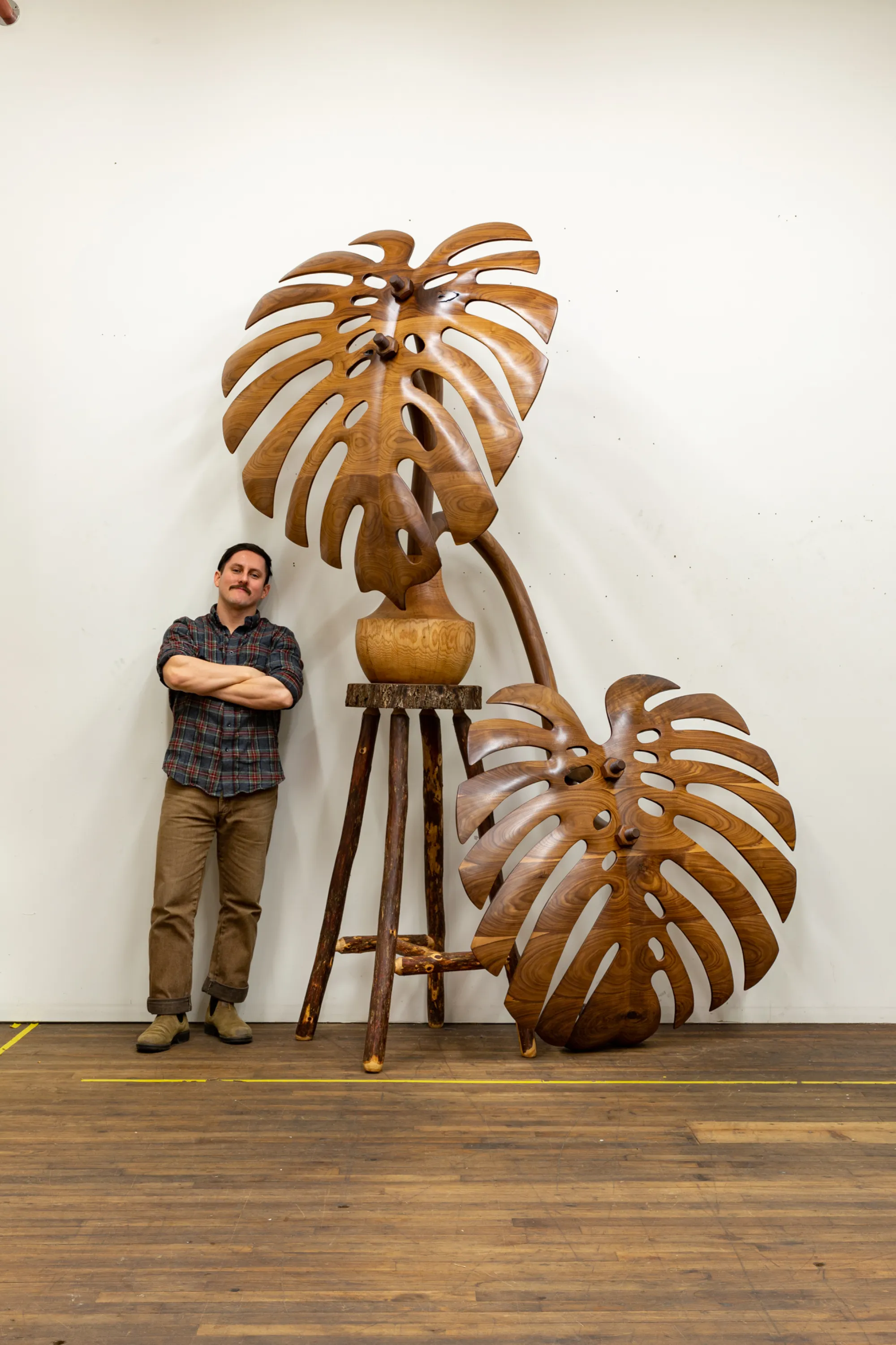
There, I ended up sharing a dreamy warehouse studio with three other artists. Collectively we built up the space to fuel our practice and make it affordable. We had everything we needed to keep working. It showed me early on the power of community.
You now exhibit in museums and major art spaces. How did you navigate the path from emerging artist to securing gallery representation and institutional opportunities?
I never stopped engaging with the art community, whether that meant participating in a group show with 100 people, doing a solo exhibition, attending residencies, giving lectures or just being present.
Along the way, I kept meeting people who were excited to help. It’s one of the best feelings to meet someone who wants to support you in the way they are an expert.
The friends you make today will grow alongside you. They become the next curators, gallery directors, art handlers, writers and artists shaping the field. Being part of your current community is incredibly important. Many of the friends I made in my early 20s are now curating major exhibitions, writing books and helping shape the conversations in art today. We all grow up eventually.
Gallery representation isn’t as important now that the internet gives you such easy access to the world. Artists now have worldwide reach, and you would be surprised how many people are actually on Instagram buying art or inviting you to be in shows and such. I actually sell directly from my studio mostly. If you are going to do the studio sales route, you just need to educate yourself on how to streamline a sale, and then it all makes sense.
What does your day-to-day life look like as a working sculptor in New York? How do you balance the creative, technical, and business sides of your practice?
I live above my studio and love it. My routine is pretty simple: workout and stretch in the morning, studio from about 9 to 6, then dinner and relaxing in the evening. Ideally there’s an opening to go to once a week.
Running a full-time studio practice is a lot of work though. I had to teach myself more skills than I ever imagined I would need, like insurance, tax law, how to hire, what to do if accidents happen, dealing with galleries that break your work, moving heavy things alone, landlord relationships, the art of timing, professional drama and all kinds of surprises.
Being completely honest, it is a huge number of hours needed to keep things afloat, but I never feel like I am working in the traditional sense. My 20s felt like I was moving nonstop to set myself up with clarity and a solid foundation, and now in my 30s I am getting to use that foundation to build my livelihood.
Woodworking at your level requires precision, patience and endurance. How do you sustain creative momentum through long, technically demanding projects?
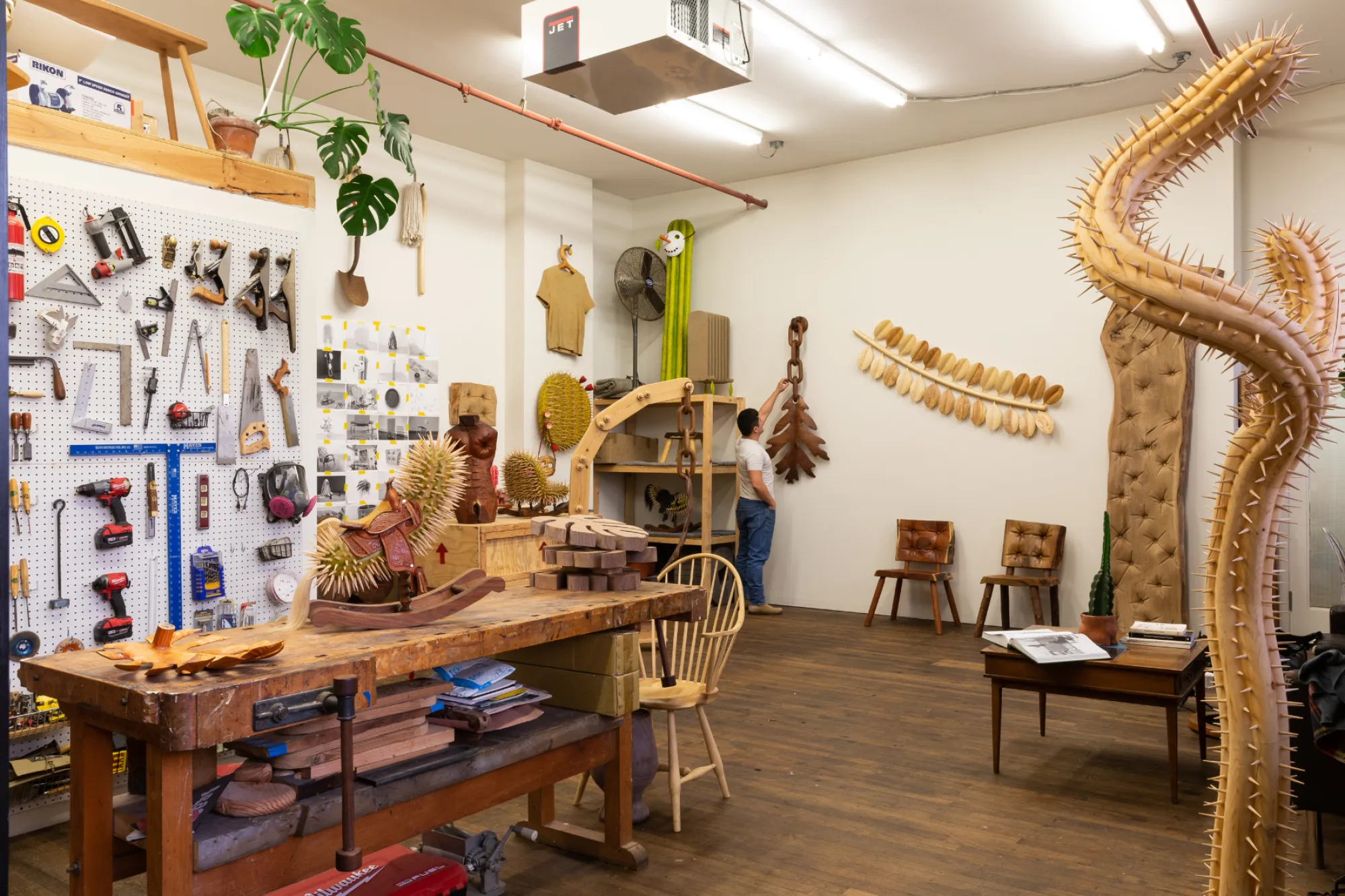
Woodworking and sculpture are hard work. There’s no way around it. You have to truly want to be there for your own reasons.
I’ve always aspired to make work that feels important to me. I don’t really work under the idea of liking or disliking something in the moment. Letting that criteria dictate whether I work or not has never been a good recipe for getting things done.
I have never enjoyed sanding wood, but it’s something I have to do to get to where I want to go.
I find myself most inspired when I’m surrounded by people who are experts in their own field, not even just in the arts, but people who for some reason have become obsessed with the ins and outs of a field of study. It teaches me curiosity and genuine intent.
Safety is also super important with what I do, so I have to make sure to only work when I am not tired or distracted. Fingers don’t grow back.
For current students who hope to pursue a studio practice, what practical advice would you offer about building a life in the arts, both creatively and professionally?
Learn how to use machinery and understand how it works. It doesn’t have to be huge machines like bandsaws or table saws. Even a jigsaw or a compass will teach you how machines work and why they work.
Schools sometimes don’t let students service machines themselves, but pay attention when someone is fixing one. Most things are built similarly, and noticing the details makes other things make sense faster. Understanding the principles behind how machines work will make you much more confident later when you want to buy your own tools and build a studio.
Apply to everything you want. Send the application, forget about it and move on. You’ll get rejected most of the time, but the ones meant for you will land. There is a lot of money circulating in the art world. Apply for it.
Try to do at least two artist residencies early in your career. They show you what you need, or don’t need, to feel comfortable making your work. Read between the lines and notice what the residency is actually for. Does it quickly connect you with a local community of artists in the city you just moved to? Is it just for a free empty studio? Does it give you access to machinery you need but can’t afford or have space to own? Does it give you money and a show at the end? Do they feed you and give you a sense of purpose while you figure out the next step?
They all do something different, and I think it’s important to apply to the ones that would help you today. Applying to something that you do not have the capacity to absorb is not as useful. Anyhow, apply. They changed my life profoundly every time. Big thank you to Ox-Bow, FAWC, Chicago Artist Coalition, LMCC and Wendell Castle Workshop.
Look for the people who understand what you mean without you having to fight for it. Your community is out there, and when you find it, the connection is powerful. Keep them around and together build the world you want to see, put on the shows you want to see, and say the things you want to hear.
I didn’t fully feel seen in design school or art school, but over the years I started to find people who truly understood what I meant and didn’t make me jump through hoops to be understood.
Learn today how to photograph your work. This skill will be one of the most valuable ones you will carry the rest of your life. Depending on someone else to photograph your work will leave you with photos you might not feel represent the character of your work. Buy a camera and learn. Every application from today until the end will ask you for photos of your work, and a bad photo will make a good piece look bad.
Position yourself in situations where you keep learning and ideally get paid to do so. Even working as a cake sculptor taught me stack lamination, which I now use in woodworking. Everything is connected, but you’re the one who has to connect the dots and build those constellations for yourself.
Creative Careers is a Q&A series featuring early and mid-career alumni of the College of Fine Arts at The University of Texas at Austin. If you'd like to nominate an alum to be featured, please email e.forbes@austin.utexas.edu.